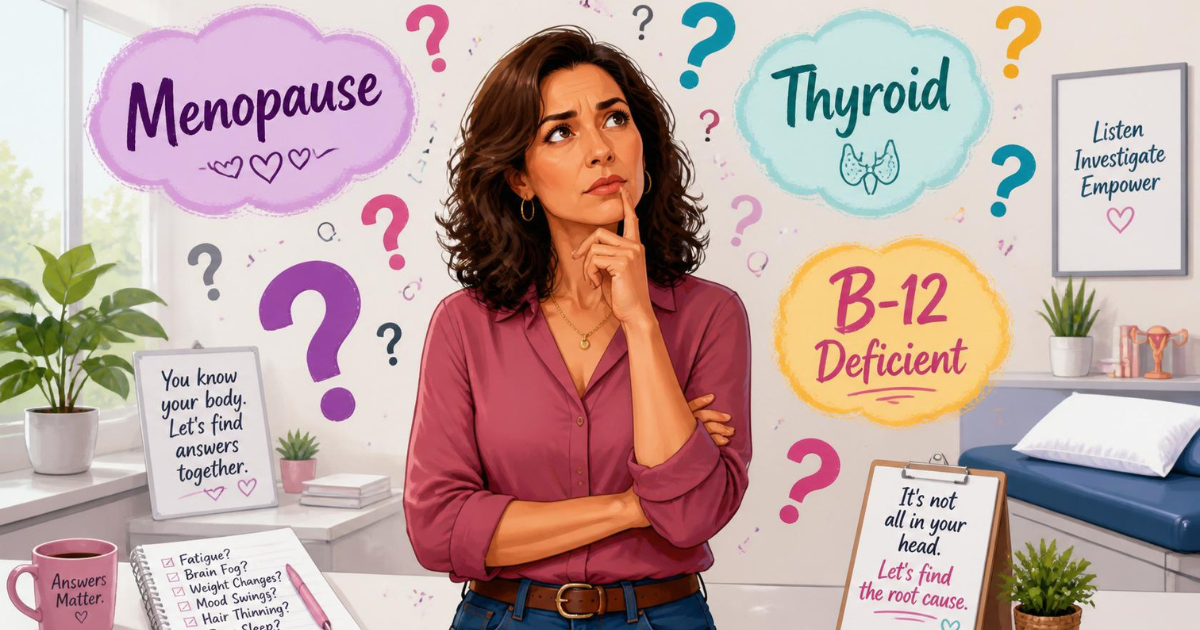
Is It Menopause or Something Else? Thyroid, Iron, and the Fatigue Look-Alikes
You've been told it's menopause. The exhaustion, the fog, the dragging-yourself-through-the-day feeling — someone waved a hand and said "it's your age." And maybe it is. But some of the most common causes of midlife fatigue aren't menopause at all — they just look exactly like it. And unlike menopause, they're simple to find with a blood test and very treatable once someone looks.
Educational Review: Her Midlife Wellness Help Editorial Team
Content Type: Research-Informed Menopause Education
Version in Spanish: ¿Es la menopausia o es otra cosa? La tiroides, el hierro y los imitadores de la fatiga
Introduction
You've been told it's menopause.
The exhaustion, the fog, the dragging-yourself-through-the-day feeling — someone waved a hand and said "it's your age, it's the change, welcome to midlife." And maybe it is. But maybe it isn't. Or maybe it's menopause and something else riding along underneath, quietly making everything worse.
Here's what almost nobody tells you: some of the most common causes of midlife fatigue are not menopause at all. They just look exactly like it. And unlike menopause, they're often simple to find with a blood test and very treatable once someone actually looks.
So this article is the one that says: don't just accept "it's menopause." Not because your doctor is wrong, but because "tired in midlife" has a short list of impostors worth ruling out — and you deserve to know what they are.
Nobody prepared us for this part. Let's make sure nothing's being missed.
Why these get mistaken for menopause
The trouble is that fatigue is what doctors call a nonspecific symptom. It doesn't point to one cause. And several conditions that spike in exactly your age range produce the same tired, foggy, not-myself feeling that menopause does.
When your symptoms could be three or four things at once, the honest move isn't to guess — it's to test. As one clinician put it plainly: fatigue and brain fog are symptoms, not diagnoses, and they can come from B12 deficiency, thyroid dysfunction, iron deficiency, insulin resistance, sleep disorders, or hormone imbalances — so testing should come first (via Newsweek, 2026).
That's the whole spirit of this article. Not "here's what's wrong with you" — but "here's what's worth checking, so you're treating the right thing."
Let's go through the big three.
1. Your thyroid
If there's one impostor to know about, it's this one — because it's common, it hits women in exactly your years, and it's endlessly mistaken for menopause.
The symptom overlap is almost comical in how complete it is. Fatigue, brain fog, mood swings, weight gain, sleep trouble, hair changes, temperature sensitivity — all of these happen in both perimenopause and an underactive thyroid, which is exactly why thyroid problems get waved off as "just menopause" (Dr. Christine Maren, 2026). The European Menopause and Andropause Society specifically flags that thyroid disorders and menopause overlap so much in symptoms that it makes diagnosis genuinely challenging (EMAS, via Medichecks, 2026).
There's one clue that helps you tell them apart, and it's worth knowing: hot flashes and feeling too hot lean toward menopause, while feeling unusually cold — cold when everyone else is comfortable — is a classic thyroid sign (Medichecks, 2026). Not a diagnosis, just a hint worth mentioning to your doctor.
Here's why it matters so much to catch: if your thyroid is off, no amount of estrogen or menopause treatment will fully fix your energy. As one menopause specialist puts it, if the thyroid isn't optimized, no amount of estrogen or progesterone will fully restore energy, metabolism, or mood (Dr. Christine Maren, 2026). You could do everything right for menopause and still feel awful, simply because the real driver was never checked.
The test: a simple TSH blood test is the high-value first step. Some providers stop at that one number — if your symptoms are strong and your TSH is "borderline," it's reasonable to ask about fuller thyroid testing (Ulta Lab Tests, 2025).
2. Your iron
This one is especially cruel in perimenopause, because perimenopause itself can cause it.
Here's the mechanism nobody explains: as your cycles become erratic in perimenopause, many women get heavier, longer periods — and heavy menstrual bleeding is a direct route to iron loss and iron-deficiency anemia (Hello Clue, 2024). (If heavy bleeding is part of your picture, that's its own subject: Heavy Bleeding During Menopause.) So the very hormonal chaos that says "menopause" can quietly be draining your iron at the same time. Doctors even have a name for it — perimenopause anemia, anemia triggered or worsened by the hormonal shifts of midlife (Women's Wellness of Mississippi, 2025).
And low iron feels exactly like menopause fatigue — the tiredness, the brain fog, the wiped-out feeling — with a few tells worth knowing: iron-deficiency anemia often adds shortness of breath after mild exertion, unusual paleness (check your inner eyelids and nail beds), and sometimes dizziness (Carrot, 2026; Hello Clue, 2024).
The frustrating part: many providers don't realize iron deficiency is a concern in perimenopause at all, so it often goes unchecked (Hello Clue, 2024). You may have to be the one to raise it.
The test: ask specifically for a ferritin level — that's the one that measures your iron stores and catches deficiency before it becomes full anemia — usually alongside a CBC (Elektra Health, 2026; Ulta Lab Tests, 2025).
3. Your B12
This is the quiet one, and it's genuinely common in your age group in a way most women don't know.
Vitamin B12 deficiency is estimated to affect 10–15% of people over 60 (PubMed, Andrès et al.), and studies in postmenopausal women specifically put it anywhere from 6% to 30% depending on the population (Sensorimotor study, NIH/PMC, 2024). That's not rare — that's common.
And the reason it climbs with age is sneaky: even if you're eating plenty of B12, your body absorbs less of it as you get older, because absorption of protein-bound B12 drops with age due to changes in the stomach lining (PubMed, Baik & Russell). So this isn't about a bad diet. A woman eating well can still run low.
The symptoms? The same familiar list — fatigue, brain fog, memory changes, weakness, low mood — plus a few that are more specifically B12: numbness or tingling in the hands and feet, and balance issues (Newsweek, 2026). B12 deficiency is so often written off as normal aging precisely because its symptoms overlap with what we expect midlife to feel like (Newsweek, 2026).
The test: a B12 blood test — and if it comes back low-normal but your symptoms are strong, ask about MMA (methylmalonic acid) testing, which can catch a deficiency a standard B12 test misses (Newsweek, 2026).
They also tangle together
One more thing worth knowing, because it shows why a single test sometimes isn't enough: these impostors feed each other.
Iron, for instance, is required to make thyroid hormone — the enzyme that builds thyroid hormone needs iron to work — so low iron can actually drag down your thyroid function even if the thyroid gland itself is fine (Thriving Proof, 2025). And B12 deficiency shows up more often in people with thyroid disease (PMC, 2023). It's not always one villain. Sometimes it's a couple of them, quietly reinforcing each other, all wearing a "menopause" costume.
That's not meant to overwhelm you. It's meant to make the case for one simple thing: a proper look, not a shrug.
What to actually do with this
Here's the honest, practical path — and notice what it is not. It's not "go buy iron and B12 supplements and hope." Please don't. Taking iron you don't need can genuinely harm you (iron overload is real), and guessing wastes months. The right order is test first, then treat what's actually low.
Confirm any deficiency with your provider before starting supplements, because targeted treatment based on your actual levels is what works (Carrot, 2026).
So:
Bring your symptoms in writing. If you've been tracking your fatigue and sleep — even a few days of it — that's real information your doctor can use, far better than "I'm always tired." (If you haven't started, my free 3-day tracker makes it easy.)
Getting answers starts with clear information.
Track your symptoms for 3 days and walk into your next appointment with real data — so you finally get the right answer.
Get the Free 3-Day Symptom TrackerAsk for the specific labs by name. A reasonable first panel for midlife fatigue is: TSH (thyroid), ferritin plus a CBC (iron), and B12 (Ulta Lab Tests, 2025). Writing those four down and bringing them to your appointment saves you a second visit. (For the full appointment playbook — every lab to request and exactly how to ask so you're not dismissed — here's the guide:What to Ask Your Doctor About Perimenopause.)
Don't accept "it's just menopause" if your gut says otherwise. You're allowed to ask "could we check my thyroid and iron before we assume?" A good provider won't mind. If yours brushes it off entirely, that's information too.
Treat what the tests find. If it's low iron, low B12, or a thyroid issue, these are among the most fixable causes of exhaustion there are. That's the hopeful part of this whole article: if one of these impostors is your real problem, you may be much closer to feeling better than you think.
A gentle reminder
Nothing is wrong with you for still feeling exhausted after you "did everything right" for menopause.
Sometimes the reason the menopause fixes aren't working is that menopause wasn't the whole story. And that's not a failure on your part — it's a gap in how often midlife women's fatigue gets properly investigated instead of waved away. For too long, "it's just your age" has been the end of the conversation when it should have been the start of a blood test.
You know better now. You know the impostors have names — thyroid, iron, B12 — and that they're findable and fixable. You know which labs to ask for. You know that testing comes before treating.
That knowledge is power in an exam room. It turns "I'm so tired" into "I'd like to rule out my thyroid, iron, and B12" — and that sentence gets a different kind of appointment.
You did not choose this exhaustion. But you are choosing to chase down the real cause instead of just enduring it. That's not being difficult. That's being your own advocate — and you're allowed to be.
You are not alone in this. And you may be closer to an answer — a real, treatable one — than anyone has led you to believe.
Frequently Asked Questions
How do I know if my fatigue is menopause or my thyroid?
You often can't tell from symptoms alone — they overlap almost completely (fatigue, fog, mood, weight, sleep). One hint: feeling too hot leans menopause, feeling unusually cold leans thyroid (Medichecks, 2026). But the only real way to know is a TSH blood test. Because thyroid problems and menopause coincide so often (EMAS), it's worth testing even when you're clearly in perimenopause.
Can perimenopause cause iron deficiency?
Yes, and it's underrecognized. Erratic, heavier perimenopausal periods can cause significant iron loss, leading to iron-deficiency anemia — sometimes called "perimenopause anemia" (Women's Wellness of Mississippi, 2025; Hello Clue, 2024). Ask for a ferritin test, which catches low iron stores before full anemia develops.
Why would I be low in B12 if I eat well?
Because absorption drops with age. Your body absorbs less protein-bound B12 as you get older due to changes in the stomach lining, so even a good diet can leave you low (PubMed). B12 deficiency affects an estimated 10–15% of people over 60 — it's common, not rare.
Should I just start taking iron and B12 supplements to be safe?
No — please test first. Taking iron you don't need can be harmful, and guessing delays finding the real cause. Confirm any deficiency with your provider before supplementing, so you treat what's actually low (Carrot, 2026).
What blood tests should I ask for if I'm exhausted in midlife?
A reasonable first panel: TSH (thyroid), ferritin plus a CBC (iron), and B12 (Ulta Lab Tests, 2025). Bring them written down. If a test is low-normal but your symptoms are strong, ask about follow-up testing (fuller thyroid panel, or MMA for B12).
If you want to walk into that appointment prepared, my free 3-day Symptom tracker gives you something concrete to show your doctor — real patterns beat "I'm always tired" every time.
Related Articles
Why Fatigue Happens During Menopause: Hormones, Cellular Energy, and Brain Function
Why Am I So Tired Even After Sleeping? The Menopause Sleep Problem Nobody Explains
Menopause Fatigue: What Actually Helps?
What to Ask Your Doctor When You Think You Are in Perimenopause or Menopause
Heavy Bleeding During Perimenopause: Causes, Treatment, and When to See a Doctor
Sources / References
Andrès, E., et al. Vitamin B12 deficiency in the elderly. (PubMed.) https://pubmed.ncbi.nlm.nih.gov/10448529/
Correlation of Vitamin B12 Deficiency with Sensorimotor Deficits in Postmenopausal Women. (NIH/PMC, 2024.) https://pmc.ncbi.nlm.nih.gov/articles/PMC12052276/
Newsweek. Vitamin B12 Deficiency Can Mimic Aging. 2026. https://www.newsweek.com/vitamin-b12-deficiency-mimic-aging-12126457
Medichecks. Thyroid vs Menopause — How to Spot the Difference. 2026. https://www.medichecks.com/blogs/thyroid/thyroid-vs-menopause-how-to-spot-the-difference
Maren, C. Thyroid vs. Perimenopause: Signs, Symptoms & Solutions. 2026. https://drchristinemaren.com/thyroid-vs-perimenopause-a-guide-to-signs-symptoms-solutions/
Hello Clue. Iron Deficiency and Perimenopause. 2024. https://helloclue.com/articles/menopause/iron-deficiency-and-perimenopause-what-are-the-signs
Elektra Health. Is It Iron Deficiency or Is It Menopause? 2026. https://elektrahealth.com/blog/iron-deficiency-or-menopause/
Carrot. Menopause and Fatigue. 2026. https://www.get-carrot.com/blog/menopause-and-fatigue
Ulta Lab Tests. Perimenopause Symptoms & Blood Tests. 2025. https://www.ultalabtests.com/blog/hormone/hormones-women/perimenopause-symptoms-blood-tests-your-next-steps/
Thriving Proof. Hypothyroidism, Iron Deficiency, and Perimenopause/Menopause. 2025. https://www.thrivingproof.com/hypothyroidism-iron-deficiency-and-perimenopause-menopause-when-fatigue-isn-t-just-getting-older/
A note, friend to friend: This article is for education and information — it's not medical advice, and it isn't a substitute for a conversation with your own doctor or a qualified health provider. Every woman's body and history are different, so what's right for someone else may not be right for you. Please bring any questions about your symptoms, treatments, or medications to a professional who knows you. You deserve care that's built around you.

Cortisol and Perimenopause — Why Stress Hits Differently Now
You have managed stress before. But something is different now. The anxiety is louder. The exhaustion is deeper. The belly weight appeared without explanation. This is what happens when cortisol and changing reproductive hormones collide — and nobody warned you they were on a collision course.
Educational Review: Her Midlife Wellness Help Editorial Team
Content Type: Research-Informed Menopause Education
Version in Spanish: Cortisol y Perimenopausia — Por Qué el Estrés Te Afecta Diferente Ahora
Introduction
You have always been a high-functioning woman. You have managed stress before. You have juggled more than most people would attempt and you have handled it.
But something is different now.
The stress that you used to shake off is sitting heavier. The anxiety that was manageable is louder. The exhaustion is deeper. The belly weight appeared without explanation. You wake up tired even after eight hours. You feel wired and exhausted at the same time — alert at midnight and dragging by 2pm.
This is not weakness. This is not burnout in the way you have experienced it before. This is what happens when cortisol and changing reproductive hormones collide — and nobody told you they were on a collision course.
What Cortisol Actually Is
Cortisol is your primary stress hormone. It is produced by your adrenal glands and it is absolutely essential for life. It regulates your blood sugar, your immune response, your inflammation levels, and your sleep-wake cycle. In short bursts cortisol is protective — it is what gets you through a crisis, a deadline, an emergency.
The problem is chronic cortisol. When your body is in a sustained state of stress — not just one crisis but the ongoing low-grade pressure of managing a career, a household, aging parents, and your own health simultaneously — cortisol stays elevated day after day. And elevated cortisol, sustained over time, begins to disrupt almost every other hormone system in your body.
Including the ones that are already under pressure from perimenopause.
The Cortisol-Progesterone Connection
This is the most important thing in this article. Read it twice.
Cortisol and progesterone are made from the same raw material — a hormone precursor called pregnenolone. When your body is under chronic stress it prioritizes cortisol production because cortisol is essential for survival. It steals the pregnenolone that would otherwise be used to make progesterone.
This is sometimes called the pregnenolone steal — and it means that chronic stress directly reduces your progesterone levels.
In perimenopause your progesterone is already declining naturally. Add chronic stress on top of that and you accelerate that decline. You are not just dealing with perimenopause. You are dealing with perimenopause plus cortisol suppression of the hormone that was already falling.
Less progesterone means more anxiety. More sleep disruption. More irritability and rage. More difficulty with mood regulation. More of every symptom you are already experiencing.
What Elevated Cortisol Does to Your Body in Perimenopause
The effects compound each other. Each one makes the others worse.
Sleep disruption Cortisol follows a natural daily rhythm — high in the morning to get you going, low at night to allow sleep. Chronic stress throws this rhythm off. Evening cortisol stays elevated when it should be dropping, making it difficult to fall asleep or stay asleep. Sleep deprivation then raises cortisol further. The cycle repeats every night.
Belly weight that will not budge Cortisol signals your body to store fat — particularly around the abdomen — as an energy reserve for the perceived threat. In perimenopause declining estrogen also shifts fat storage toward the midsection. The combination of high cortisol and declining estrogen creates the belly weight that appears in midlife seemingly out of nowhere and refuses to respond to diet and exercise the way it used to.
Blood sugar instability Cortisol raises blood sugar by triggering glucose release from the liver. Over time chronically elevated cortisol contributes to insulin resistance — which worsens weight gain, energy crashes, sugar cravings, and brain fog. Insulin resistance increases significantly during perimenopause and cortisol accelerates it.
Brain fog and memory issues The hippocampus — the part of your brain most involved in memory and learning — is extremely sensitive to cortisol. Chronically elevated cortisol damages hippocampal function over time, contributing to the memory lapses, word-finding difficulties, and concentration problems that so many women in perimenopause experience. This is not early dementia. This is a stressed and hormonally disrupted brain that needs support.
Immune suppression Chronic cortisol suppresses your immune system, making you more susceptible to illness, slower to recover, and more vulnerable to inflammation — which worsens joint pain, fatigue, and mood symptoms.
Heart palpitations and anxiety Elevated cortisol keeps your nervous system in a state of low-grade activation — your fight-or-flight response dialed up just enough to cause heart palpitations, a sense of dread, difficulty relaxing, and anxiety that does not have an obvious cause. In perimenopause declining estrogen also affects the cardiovascular and nervous system — the two conditions together amplify each other.
Why This Is Especially True for the Sandwich Generation
If you are navigating perimenopause while also managing the care of an aging parent you are carrying a cortisol load that is genuinely extraordinary.
Research consistently shows that family caregivers — particularly women — report significantly higher rates of stress, anxiety, depression, and physical health decline than non-caregivers. The demands of caregiving do not spike and resolve. They are constant. That sustained cortisol elevation directly suppresses progesterone, disrupts sleep, drives insulin resistance, and worsens every perimenopause symptom.
Women in the sandwich generation — managing their own midlife transition while also managing the decline of a parent — are living one of the most demanding seasons a woman can experience. The exhaustion is not weakness. It is the physiological result of everything you are carrying.
What You Can Do — Real Strategies That Address the Root
The answer is not just meditation. These are targeted interventions that address the cortisol-hormone relationship directly.
Get your cortisol tested Ask your doctor for a morning cortisol test. Ideally a four-point salivary cortisol test — taken at morning, midday, afternoon, and evening — gives a picture of your cortisol rhythm throughout the day. This tells you whether you are in a cortisol spike pattern, a flatline pattern from adrenal exhaustion, or something in between. Read our article on what to ask your doctor for guidance on this conversation.
Protect your sleep above everything else Sleep is the most powerful cortisol regulation tool available and it costs nothing. When you sleep your cortisol rhythm resets. When you do not your cortisol stays dysregulated. Prioritizing sleep is not a luxury — it is hormonal medicine. Create a wind-down routine. Keep your room cool and dark. Limit screens after 9pm. If perimenopause symptoms are disrupting your sleep talk to your doctor about addressing the hormonal cause directly.
Move your body — but not too hard Exercise lowers cortisol — but high-intensity exercise for chronically stressed women in perimenopause can temporarily spike cortisol further. Walking, strength training, yoga, and swimming are particularly well-suited to this season. The goal is consistent moderate movement — not punishment — and it has a meaningful impact on cortisol, insulin resistance, and mood.
Eat to stabilize your blood sugar Cortisol and blood sugar are deeply connected. Skipping meals, eating high-sugar foods, and going long stretches without protein all spike cortisol. Prioritize protein at every meal, eat regularly, and reduce processed sugar — not for weight loss but for hormonal stability.
Address the caregiving load honestly If you are a caregiver — this is the conversation nobody wants to have. The caregiving load is a primary cortisol driver and it does not get better by ignoring it. Ask for help. Divide responsibilities. Use the resources in our Her Parents Help library to organize and share the burden. Protecting your own health is not selfish. It is necessary. You cannot pour from an empty vessel.
Consider adaptogenic support Adaptogens — herbs like ashwagandha, rhodiola, and holy basil — have evidence supporting their ability to modulate cortisol response. They are not a replacement for the strategies above but they can support your adrenal system during a demanding season. Talk to your healthcare provider before adding any supplement.
Track Your Symptoms — The Connection Will Become Clear
When you start tracking your symptoms — energy levels, mood, sleep quality, anxiety, and stress load — patterns emerge. You will likely see that your worst perimenopause days follow your highest stress periods. That is the cortisol-hormone connection made visible.
Use our Midlife Symptom Tracker to document both your symptoms and your stress levels together. Bring that documentation to your doctor. It makes the conversation specific and grounded in evidence rather than a general sense that everything feels worse.
A Word for the Woman Who Is Running on Empty
You have been running hard for a long time. Doing everything for everyone. Keeping it all together. And now your body is sending signals that the pace is not sustainable.
Those signals are not weakness. They are information. Cortisol dysregulation, hormonal depletion, and chronic stress fatigue are real physiological states that respond to real interventions. You are not broken. You are depleted. And there is a meaningful difference.
This season asks you to take your own health as seriously as you take everyone else's. Not someday. Now.
Practical Tools:
Signs of Caregiver Burnout — And What to Do When You Are Running on Empty
BetterHelp — accessible online therapy — betterhelp.com
MIDI Health — menopause-informed telehealth — joinmidi.com
Your body is changing and it is trying to tell you something.
Pause and understand where you are.
FAQ
What is the connection between cortisol and perimenopause symptoms?
Cortisol and progesterone are made from the same hormonal precursor — pregnenolone. When you are under chronic stress your body prioritizes cortisol production and diverts pregnenolone away from progesterone production. In perimenopause your progesterone is already declining. Chronic stress accelerates that decline — worsening anxiety, sleep disruption, mood instability, and irritability. Cortisol also disrupts estrogen signaling, contributes to insulin resistance, and interferes with thyroid function — all of which compound perimenopause symptoms.
Why do I feel wired but exhausted at the same time?
This is a classic sign of cortisol dysregulation. Your cortisol rhythm — which should be high in the morning and low at night — has been disrupted by chronic stress. Evening cortisol stays elevated when it should drop, keeping your nervous system activated and making sleep difficult. At the same time your adrenals may be depleted from sustained overproduction, leaving you fatigued during the day. The result is exactly what you described — unable to sleep but too tired to function well.
Is belly weight in perimenopause really caused by cortisol?
Partly yes. Cortisol signals your body to store fat as an abdominal energy reserve. Declining estrogen during perimenopause also shifts fat storage toward the midsection. The combination of both — high cortisol and low estrogen — is why midlife belly weight is so resistant to diet and exercise that previously worked. Addressing cortisol through sleep, stress management, and blood sugar stabilization is a meaningful part of addressing this.
Can I test my cortisol at home?
Yes — salivary cortisol tests are available without a prescription and provide a four-point picture of your cortisol rhythm throughout the day. However interpreting those results is best done with a healthcare provider who understands the hormone context. Ask your doctor about a cortisol test — and read our article on what to ask your doctor [link] for guidance on that conversation.
What supplements help with cortisol in perimenopause?
Adaptogenic herbs — ashwagandha, rhodiola, holy basil — have evidence supporting cortisol modulation. Magnesium glycinate supports sleep and nervous system regulation. Vitamin C is used by the adrenal glands in significant quantities during stress. However supplements work best alongside — not instead of — the foundational strategies of sleep, movement, blood sugar stability, and stress load reduction. Always consult your healthcare provider before starting any supplement.
How does caregiving affect cortisol in perimenopause?
Significantly. Research consistently shows that women who are family caregivers experience cortisol dysregulation at rates higher than non-caregivers. Caregiving is a chronic stressor — meaning cortisol stays elevated day after day rather than spiking and resolving. That sustained elevation directly suppresses progesterone, disrupts sleep, drives insulin resistance, and worsens every perimenopause symptom. If you are a caregiver in perimenopause your cortisol load deserves specific attention and support.
Disclaimer:This article is for informational purposes only and does not constitute medical advice. Always consult a qualified healthcare provider about your specific symptoms and treatment options.
References — English:
The Menopause Society. Stress and Menopause.menopause.org
Cleveland Clinic. Cortisol — What It Is and How It Affects Your Health.clevelandclinic.org
Harvard Health Publishing. Cortisol and the Stress Response.health.harvard.edu
Mayo Clinic. Chronic Stress — Symptoms and Causes.mayoclinic.org
National Institute of Mental Health. Stress and Your Health.nimh.nih.gov
MIDI Health. Menopause-Informed Telehealth Care.joinmidi.com
Her Midlife Wellness Help. Midlife Symptom Tracker.hermidlifewellnesshelp.com

What to Ask Your Doctor When You Think You Are in Perimenopause or Menopause
You have been feeling off for a while. The sleep. The mood. The brain fog. The heat at 3am. You are ready to talk to your doctor — but walking in without preparation is how you walk out with no answers. Here is exactly what to ask, what to test, and how to make sure you are heard.
The questions, the tests, and the conversation guide she never gave you
Published: May 14, 2026
Educational Review: Her Midlife Wellness Help Editorial Team
Content Type: Research-Informed Menopause Education
Version in Spanish: Qué Preguntarle al Médico Cuando Crees Que Estás en la Perimenopausia o la Menopausia
Introduction
You have been feeling off for a while now. Maybe it started with the sleep. Or the mood swings that came out of nowhere. Or the brain fog that makes you feel like you are thinking through wet concrete. Or the heat that rolls through your body at 3am and leaves you wide awake staring at the ceiling.
You have googled it. You have talked to your sister. You have wondered if you are losing your mind or just getting old. And now you are finally ready to talk to your doctor.
But here is the thing nobody tells you — walking into that appointment without preparation is how you walk out with no answers.
Doctors are busy. Appointments are short. And perimenopause is one of the most under-diagnosed, under-treated, and under-discussed conditions in women's healthcare. If you do not know what to ask — you may leave with a referral for anxiety medication and a pat on the shoulder.
This article changes that.
First — Take the Quiz
Before your appointment — and before you read another word — take our free Perimenopause Symptom Quiz below. It takes less than five minutes and gives you a clearer picture of where you might be in your hormonal transition. Print your results and bring them to your appointment. It gives your doctor something concrete to look at instead of a list of vague symptoms.
Your body is changing and it is trying to tell you something.
Pause and understand where you are.
Why Tracking Your Symptoms Changes Everything
Here is something most women do not know going into their first perimenopause appointment. A doctor can dismiss "I have been feeling off" in thirty seconds. They cannot dismiss thirty days of documented symptoms with dates, frequency, and severity.
Before your appointment track your symptoms for at least two to four weeks. Every day. Write down what happened, when it happened, and how severe it was on a scale of one to ten. Hot flashes. Sleep disruption. Mood changes. Brain fog. Irregular periods. Fatigue. Joint pain. Heart palpitations. Vaginal dryness. Anxiety. All of it.
Use our Free Midlife Symptom Tracker — to keep everything in one place. It is designed specifically for this conversation. When you walk into that appointment with a documented pattern your doctor has to engage with the evidence. It is much harder to say "that sounds like stress" when you have thirty days of data showing otherwise.
The woman who tracks her symptoms gets taken more seriously. Every time.
The Conversation Most Women Are Not Having
Perimenopause can begin as early as your late thirties and last anywhere from four to twelve years before you reach menopause — which is defined as twelve consecutive months without a period. The average woman enters perimenopause in her mid to late forties but every woman is different.
Here is what makes this conversation complicated. Many doctors — even well-meaning ones — are not adequately trained in perimenopause and menopause care. Studies show that the majority of OB-GYN residency programs dedicate less than two hours to menopause education. Less than two hours. For a transition that affects every woman who lives long enough to experience it.
You may be told your labs are normal when you feel anything but. You may be handed a prescription without anyone ever asking about your hormones — not because the medication is wrong, but because the full conversation never happened. You may be told you are too young.
You are not too young. Your symptoms are real. And you deserve a doctor who takes them seriously.
What to Say When You Walk In
Do not start with "I think I might be going through perimenopause." That phrase alone sometimes triggers a dismissive response before you have said anything else.
Instead try opening with your symptoms — specific, documented, impactful.
"I have been experiencing significant sleep disruption, hot flashes, mood changes, and brain fog for the past several months. It is affecting my work and my daily life. I would like to talk about what might be causing this and what testing we can do."
That is a different conversation than "I think I might be hormonal."
Then — when the time is right — ask directly:
"I would like a full hormone panel. Can we test my FSH, estradiol, progesterone, testosterone, thyroid, cortisol, DHEA, and vitamin D? I want a complete picture of what is happening hormonally."
Write that sentence down. Put it in your phone. Say it out loud before you go in. Because in the moment — when the doctor is nodding and moving on — it is easy to forget to ask.
The Complete Hormone Panel — What to Request and Why
This is the section to screenshot, print, and bring with you.
FSH — Follicle Stimulating Hormone FSH rises as your ovarian reserve declines. Elevated FSH is one of the earliest hormonal signs of perimenopause. However — and this is important — FSH fluctuates significantly during perimenopause and a single normal reading does not rule it out. Ask for it anyway as a baseline.
Estradiol This is your primary estrogen. Declining estradiol is responsible for many of the most disruptive perimenopause symptoms — hot flashes, vaginal dryness, sleep disruption, bone loss, and brain fog. Low estradiol on labs combined with your symptoms tells a clear story.
Progesterone Progesterone often declines before estrogen does — which is why irregular periods and sleep disruption are frequently the first symptoms women notice. Low progesterone also contributes significantly to anxiety and mood changes that are often misdiagnosed as depression.
Testosterone — Total and Free Most doctors do not test testosterone in women unless specifically asked. This is a significant gap. Testosterone affects energy, libido, muscle mass, mood, and cognitive function in women. Many women in perimenopause experience low testosterone symptoms for years before anyone thinks to test for it.
Ask for both total and free testosterone. Free testosterone — the portion your body can actually use — is often more clinically meaningful than total testosterone alone.
DHEA-S DHEA is a precursor hormone produced by the adrenal glands that converts to both estrogen and testosterone. DHEA declines with age and low levels contribute to fatigue, low libido, and mood changes. Easy to test. Frequently overlooked.
Thyroid Panel — TSH, Free T3, Free T4 This one is non-negotiable. Thyroid dysfunction — particularly hypothyroidism — mimics perimenopause symptoms almost exactly. Fatigue. Weight gain. Brain fog. Mood changes. Hair loss. Cold sensitivity. Many women are treated for perimenopause for years before someone checks their thyroid.
Ask for a full thyroid panel — not just TSH. TSH alone can appear normal while Free T3 and Free T4 tell a different story. If your doctor will only order TSH — push for the full panel or seek a second opinion.
Cortisol Cortisol is your primary stress hormone and it has a profound relationship with your reproductive hormones. Chronic high cortisol — which is extremely common in women who are managing careers, households, and caregiving responsibilities simultaneously — suppresses progesterone, disrupts sleep, contributes to weight gain around the midsection, and worsens almost every perimenopause symptom. A morning cortisol test gives your doctor important information about your adrenal function.
Vitamin D Low vitamin D is epidemic among women in midlife and its symptoms — fatigue, mood changes, muscle weakness, bone pain — overlap significantly with perimenopause. It is also essential for bone health at a time when declining estrogen accelerates bone loss. Ask for your 25-hydroxy vitamin D level.
Complete Blood Count and Comprehensive Metabolic Panel These are baseline health markers that tell your doctor about your red blood cells, kidney function, liver function, blood sugar, and electrolytes. They are often ordered routinely but worth confirming — particularly a fasting glucose and HbA1c if you have concerns about insulin resistance, which increases during perimenopause.
The Seven Questions to Ask Your Doctor
Write these down. Check them off during your appointment.
1. Based on my symptoms and these labs, do you think I am in perimenopause?
2. What treatment options are available to me — including hormone replacement therapy?
3. What are the risks and benefits of HRT for someone with my health history?
4. If I am not a candidate for HRT, what other evidence-based options exist for my specific symptoms?
5. How often should we retest my hormones and monitor my symptoms?
6. At what point would you refer me to a menopause specialist?
7. Are you familiar with the current Menopause Society guidelines on hormone therapy?
That last question matters. The North American Menopause Society updated its hormone therapy guidelines significantly in recent years — moving away from the fear-based approach that dominated medicine for two decades after the Women's Health Initiative study. A doctor who is current on those guidelines will practice very differently from one who is not.
What to Do If You Are Dismissed
It happens. More than it should. If your doctor tells you your labs are normal, you are too young, or suggests this is anxiety — you have options.
Ask specifically: "My labs may be in the normal range but I am experiencing significant symptoms that are affecting my quality of life. Can we talk about what options exist for symptomatic treatment even if my numbers look normal?"
Normal lab ranges for hormones are based on averages across all women of all ages. Optimal hormone levels for symptom relief may be different from what a lab flags as normal. This distinction matters enormously.
If you continue to feel dismissed — seek a second opinion. Look specifically for a provider who is a Certified Menopause Practitioner through the Menopause Society or who specializes in midlife women's health. Telehealth options like MIDI Health connect you with menopause-informed providers regardless of where you live — and that changes everything for women who do not have access to a specialist locally.
Practical Tools to Bring to Your Appointment:
Your completed Perimenopause Symptom Quiz results —quiz
Your Midlife Symptom Tracker with at least two weeks of documented entries — track your symptoms
This article printed or saved on your phone
Your list of current medications and supplements
The seven questions above written down
A trusted person who can sit with you and take notes if needed
A Word for You Before You Go
You have been living in this body your whole life. You know when something has changed. You know when the person looking back at you in the mirror is not quite herself. You know when the exhaustion is different from tired and the fog is different from distracted and the heat is different from just being warm.
Trust what you know. Document what you feel. Walk into that appointment prepared and advocating for yourself — because you deserve a doctor who takes you seriously.
This transition is real. Your symptoms are real. And the care you are looking for exists. You just have to know how to ask for it.
Related Articles
Heavy Bleeding During Perimenopause: Causes, Treatment, and When to See a Doctor
What Age Does Perimenopause Start? Understanding the Beginning of the Menopause Transition
Hormone Therapy for Menopause: Benefits, Risks, and What Women Should Know
Common Questions
Can my doctor diagnose perimenopause with a blood test?
Not definitively — and this surprises many women. Perimenopause is primarily a clinical diagnosis based on your symptoms and menstrual history. Lab work provides supporting evidence but hormone levels fluctuate so significantly during perimenopause that a single normal result does not rule it out. This is why symptom tracking and documenting patterns over time is so valuable. It gives your doctor a picture that a one-time blood draw cannot.
What if my doctor says I am too young for perimenopause?
Perimenopause can begin in the late thirties for some women. If you are in your early to mid forties and experiencing classic symptoms — irregular periods, hot flashes, sleep disruption, mood changes, brain fog — you are not too young. Ask your doctor to test your hormones and evaluate your symptoms together. If they dismiss you without testing consider seeking a second opinion from a provider who specializes in midlife women's health.
What is the difference between perimenopause and menopause?
Perimenopause is the transition period — the years leading up to your final period when your hormone levels begin to fluctuate and decline. It can last four to twelve years. Menopause is a single moment in time — the point at which you have gone twelve consecutive months without a period. Everything after that is postmenopause. Most of the symptoms women associate with menopause actually occur during perimenopause.
Should I track my symptoms even if I am not sure I am in perimenopause?
Absolutely — and start now. Symptom tracking gives you and your doctor a baseline. It documents patterns that might not be obvious in the moment. And it protects you from being dismissed with "that sounds like stress." Use our Midlife Symptom Tracker — [Insert link] — to keep everything organized before your appointment.
What is HRT and is it safe?
Hormone Replacement Therapy — HRT — replaces the hormones your body is producing less of during perimenopause and menopause. For many years HRT was avoided due to concerns raised by the Women's Health Initiative study in 2002. More recent research and updated guidelines from the Menopause Society indicate that for most healthy women under 60 who are within ten years of menopause onset, the benefits of HRT outweigh the risks. Talk to your doctor about your specific health history and whether HRT is appropriate for you.
What is MIDI Health and how can it help?
MIDI Health is a telehealth platform staffed by providers who specialize in menopause and midlife women's health. If you have been dismissed by your primary care doctor or cannot access a menopause specialist locally MIDI connects you with a provider who will take your symptoms seriously. They prescribe and manage hormone therapy and other treatments for perimenopause and menopause. Available in most US states. Visit joinmidi.com to learn more.
Your body is changing and it is trying to tell you something.
Pause and understand where you are.
Disclaimer:This article is for informational purposes only and does not constitute medical advice. Always consult a qualified healthcare provider about your specific symptoms, health history, and treatment options.
References:
The Menopause Society (formerly NAMS). Menopause Practice: A Clinician's Guide.menopause.org
MIDI Health. Menopause-Informed Telehealth Care for Women.joinmidi.com
Mayo Clinic. Perimenopause — Symptoms and Causes.mayoclinic.org
Cleveland Clinic. Perimenopause: Signs, Symptoms and Treatment.clevelandclinic.org
National Institute on Aging. Menopause: What You Need to Know.nia.nih.gov
Menopause Society. 2022 Hormone Therapy Position Statement.menopause.org
American College of Obstetricians and Gynecologists. Menopause FAQs.acog.org
Christiane Northrup, MD. The Wisdom of Menopause.drnorthrup.com
Her Midlife Wellness Help. Midlife Symptom Tracker.hermidlifewellnesshelp.com

Perimenopause Symptoms: 36 Signs of the Menopause Transition
This article explains perimenopause symptoms: 35 signs of the menopause transition and the underlying health changes that can occur during perimenopause and menopause. Learn the possible causes, what the symptoms may mean, and when medical evaluation may be appropriate.
Published: April 13, 2026
Educational Review: Midlife Wellness Help Editorial Team
Content Type: Research-Informed Menopause Education
Version in spanish: Síntomas de la Perimenopausia: 36 Señales de la Transición hacia la Menopausia
Introduction
Something is changing.
You can feel it — even if you cannot quite name it yet.
Your sleep may feel lighter. Your periods may arrive earlier than expected or disappear for a month. Your mood, memory, temperature, or energy levels may begin shifting in ways that feel unfamiliar.
Many women assume these changes are stress, aging, or simply a busy life.
But often they are the early signs of perimenopause.
Perimenopause is the transitional stage leading up to menopause, when the ovaries gradually begin producing less estrogen and progesterone. These hormonal fluctuations influence many systems throughout the body — including the brain, nervous system, metabolism, sleep regulation, and reproductive organs.
Because hormones interact with so many biological systems, the menopause transition can produce a surprisingly wide range of symptoms — far beyond the hot flashes most women expect. Sleep, mood, memory, digestion, metabolism, joints, skin, and cardiovascular signaling can all be affected.
Some women experience only mild changes. Others notice more significant shifts in sleep, mood, metabolism, or temperature regulation.
This guide explains 36 of the most commonly reported symptoms of perimenopause — and the biology behind why they occur.
Understanding these changes can help women recognize what is happening inside the body and approach the menopause transition with greater clarity and confidence.
What Is Perimenopause?
Perimenopause refers to the years leading up to menopause, when ovarian hormone production begins to change.
Menopause itself is defined as twelve consecutive months without a menstrual period. Perimenopause occurs before this point, sometimes lasting several years.
During this transition:
• Ovulation may occur irregularly
• Estrogen levels fluctuate unpredictably
• Progesterone production becomes less consistent
• Hormonal signaling within the brain and nervous system adapts
These changes influence many regulatory systems within the body.
Research from the National Institutes of Health shows that estrogen receptors exist throughout the brain and body, including areas responsible for sleep regulation, temperature control, mood stability, metabolism, and cardiovascular function. When estrogen levels fluctuate, these systems may respond in different ways.¹
Why Perimenopause Symptoms Occur
Hormones do far more than regulate reproductive cycles. Estrogen and progesterone interact with numerous physiological systems that help maintain stability throughout the body.
These hormones influence:
• neurotransmitter activity in the brain
• sleep architecture
• temperature regulation
• metabolism and energy balance
• cardiovascular signaling
• bone maintenance
• skin and connective tissue
As hormone levels fluctuate during perimenopause, the brain and nervous system begin adjusting their regulatory patterns.
The hypothalamus, a small but critically important region of the brain, plays a central role in this process. It helps coordinate body temperature, sleep cycles, stress response, and hormonal communication.
When estrogen signaling becomes more variable, the hypothalamus and other regulatory systems recalibrate. This adjustment process explains why symptoms such as sleep changes, hot flashes, mood shifts, or brain fog may occur during the menopause transition.²
36 Common Symptoms of Perimenopause
Although every woman’s experience is unique, many symptoms of perimenopause occur due to similar biological mechanisms.
Below are some of the most commonly reported signs of the menopause transition.
Menstrual and Reproductive Changes
Irregular menstrual cycles
Skipping periods
Heavier menstrual bleeding
Shorter cycles
Longer cycles
Spotting between periods
Changes in menstrual flow
These changes often occur because ovulation becomes less predictable during perimenopause.
Temperature and Vasomotor Symptoms
8.Hot flashes
9.Night sweats
10.Sudden warmth or flushing
11.Increased temperature sensitivity
These symptoms occur when the brain’s thermoregulatory system becomes more sensitive as estrogen levels fluctuate.
Sleep Changes
12.Difficulty falling asleep
13.Waking frequently during the night
14.Early morning waking
15.Non-restorative sleep
Sleep disruption during perimenopause may be influenced by temperature regulation changes, stress sensitivity, or shifts in circadian rhythm coordination.³
Cognitive Changes
16.Brain fog
17.Difficulty concentrating
18.Forgetting familiar words
19.Reduced mental clarity
These symptoms are often linked to hormonal interactions with brain regions responsible for memory and cognitive processing.
Mood and Emotional Changes
20.Increased anxiety
21.Mood swings
22.Irritability
23.Reduced stress tolerance
24.Feelings of overwhelm
Estrogen influences neurotransmitters such as serotonin and dopamine, which help regulate mood and emotional stability.
Metabolic and Body Composition Changes
25.Weight gain, particularly around the abdomen
26.Slower metabolism
27.Changes in appetite
28.Increased fatigue
Hormonal changes can influence how the body regulates energy storage, insulin sensitivity, and muscle mass.
Musculoskeletal Symptoms
29.Joint stiffness
30.Muscle aches
31.Reduced muscle strength
Research suggests estrogen may play a role in supporting connective tissue and joint health.⁴
Skin, Hair, and Tissue Changes
32.Hair thinning
33.Dry skin
34.Reduced skin elasticity
Estrogen contributes to collagen production and skin hydration. As hormone levels decline, these tissues may gradually change.
Other Physical Symptoms
35.Heart palpitations or increased heart awareness
36.Vaginal dryness or discomfort
Declining estrogen levels can affect vaginal tissue health and lubrication during perimenopause.
Changes in autonomic nervous system regulation may influence cardiovascular signaling during hormonal transition.
How Common Are Perimenopause Symptoms?
The menopause transition affects every woman differently.
According to the North American Menopause Society, many women begin noticing symptoms in their 40s, though some experience changes earlier. Some women experience only mild symptoms, while others may notice more pronounced shifts in sleep, metabolism, or menstrual patterns.⁵
Because perimenopause unfolds gradually, many women do not initially recognize the early signs.
Understanding the range of possible symptoms can help women identify patterns and seek guidance when needed.
When to Speak With a Healthcare Professional
Although many symptoms of perimenopause are part of a normal biological transition, certain symptoms should be evaluated by a healthcare professional.
Medical evaluation may be recommended if you experience:
• extremely heavy menstrual bleeding
• bleeding after menopause
• severe or persistent sleep disruption
• significant mood changes
• symptoms that interfere with daily functioning
Healthcare providers can help determine whether symptoms are related to perimenopause or another medical condition.
Actions Women Can Take When Perimenopause Symptoms Begin
Although perimenopause is a natural biological transition, several practical steps may help women navigate the hormonal changes with greater comfort and awareness.
Track menstrual cycles and symptoms
Keeping a simple record of menstrual patterns, sleep quality, mood changes, and physical symptoms can help identify trends over time.
This information may also help healthcare providers better evaluate symptoms and determine whether hormonal changes may be contributing.
Support sleep and stress regulation
Hormonal fluctuations can influence the nervous system and the body’s stress response.
Practices that support nervous system stability may include:
• maintaining consistent sleep and wake times
• engaging in regular physical activity
• practicing relaxation techniques such as breathing exercises, mindfulness, or gentle stretching
These strategies may help improve sleep quality and emotional resilience during hormonal transitions.
Maintain metabolic and nutritional health
Balanced nutrition that includes adequate protein, fiber, healthy fats, and essential micronutrients can support metabolic health during midlife.
Regular movement also helps maintain muscle mass, energy balance, and cardiovascular health.
Seek medical guidance when needed
Although many perimenopause symptoms are part of a normal transition, some symptoms may benefit from medical evaluation or treatment.
Healthcare providers may help evaluate hormonal changes, rule out other conditions, and discuss treatment options if symptoms significantly affect quality of life.
Stay informed about midlife health
Understanding the biological changes that occur during perimenopause can reduce unnecessary fear and confusion.
Education allows women to recognize patterns, ask informed questions, and make decisions that support their long-term health.
Your body is changing and it is trying to tell you something.
Pause and understand where you are.
Educational Importance
Menopause is often discussed as a single moment in time, but in reality it is a gradual biological transition that can unfold over several years.
Understanding the science behind perimenopause symptoms helps replace uncertainty with knowledge.
The brain, nervous system, metabolism, and reproductive system are all adjusting to new hormonal patterns. These changes reflect physiological adaptation, not failure.
Education allows women to recognize symptoms earlier, make informed decisions about their health, and approach midlife with greater confidence.
Takeaway
Perimenopause is the transitional stage leading up to menopause, when hormone levels fluctuate and gradually decline.
Because estrogen and progesterone influence many systems throughout the body, the menopause transition can produce a wide range of symptoms affecting sleep, mood, metabolism, cognition, and temperature regulation.
Although these symptoms can feel confusing, they often reflect the body’s natural process of hormonal adjustment.
Understanding these changes can help women navigate the menopause transition with greater clarity and reassurance.
Your body is not failing.
Your hormones are shifting.
And these symptoms have a biological explanation.
Final Perspective
Thirty-six symptoms is a long list.
But here is what matters most — you do not have to experience all of them. Many women notice only a handful. Others recognize symptoms they had no idea were connected to hormones.
What this list gives you is not a checklist of everything that will go wrong. It is a map of what is possible — so that when something shifts you have the language to name it, the context to understand it and the knowledge to seek help when you need it.
Save this article. Because the most powerful thing a woman can have during the menopause transition is information.
And now you have it.
Common Questions About Perimenopause Symptoms
Do all women experience the same symptoms during perimenopause?
No. Every woman’s experience is different. Some women notice only mild changes, while others may experience more noticeable shifts in sleep, mood, metabolism, or menstrual patterns.
Can perimenopause symptoms begin before age 40?
Yes. Although perimenopause most commonly begins during the 40s, some women may notice hormonal changes in their late 30s.
Why do symptoms appear and disappear during perimenopause?
Hormone levels fluctuate rather than declining steadily. Estrogen and progesterone levels may rise or fall from month to month, which can cause symptoms to come and go.
Are hot flashes the only symptom of perimenopause?
No. While hot flashes are widely recognized, perimenopause can affect many systems throughout the body, including sleep, mood, cognition, metabolism, skin, joints, and cardiovascular signaling.
Should I speak with a doctor about perimenopause symptoms?
If symptoms become severe, persistent, or interfere with daily life, speaking with a healthcare professional can help determine whether hormonal changes or another medical condition may be involved.
Related topics
Medical and Educational Disclaimer
Educational information only. This article summarizes research from medical and scientific sources and is not medical advice. Always consult a qualified healthcare professional for diagnosis or treatment.
References
National Institutes of Health. Hormones and Brain Function.
https://www.nih.gov
National Library of Medicine. Estrogen and Hypothalamic Regulation.
https://www.nlm.nih.gov
Harvard Health Publishing. Menopause and Sleep Changes.
https://www.health.harvard.edu
Cleveland Clinic. Menopause and Joint Health.
https://my.clevelandclinic.org
North American Menopause Society. Perimenopause Overview.
https://www.menopause.org

How Long Does Perimenopause Last? Understanding the Menopause Transition Timeline
This article explains how long does perimenopause last? understanding the menopause transition timeline and the underlying health changes that can occur during perimenopause and menopause. Learn the possible causes, what the symptoms may mean, and when medical evaluation may be appropriate.
Published: March 7, 2026
Educational Review: Midlife Wellness Help Editorial Team
Content Type: Research-Informed Menopause Education
Version in Spanish: ¿Cuánto dura la perimenopausia? Comprender el tiempo de la transición hacia la menopausia
Introduction
You want a number.
A timeline. A finish line. Some reassurance that what you are feeling right now will not last forever.
“How long does perimenopause last?” is one of the first questions many women ask when symptoms begin — and one of the hardest to answer with certainty.
Because perimenopause does not follow a strict schedule.
For some women the transition lasts only a few years. For others it unfolds gradually over nearly a decade. Symptoms may appear, disappear, and return again without warning, making the experience feel unpredictable and frustrating.
But research does offer important perspective.
Perimenopause is a temporary biological transition. It has a beginning, a middle, and an end. Understanding the typical timeline can help transform uncertainty into something far more manageable.
This article explains how long perimenopause typically lasts, why symptoms can feel unpredictable, and what the different stages of the menopause transition look like.
What Is Perimenopause?
Perimenopause refers to the years leading up to menopause, when the ovaries gradually produce less estrogen and progesterone.
Menopause itself is defined as twelve consecutive months without a menstrual period. Perimenopause occurs before this point and represents the body’s natural transition toward the end of reproductive cycles.
During this stage:
• Ovulation becomes less predictable
• Hormone levels fluctuate more widely
• The brain and endocrine system adjust to changing signals
These hormonal changes influence multiple systems throughout the body, including sleep regulation, metabolism, mood stability, and temperature regulation.
Because hormones interact with many biological systems, the menopause transition can produce a wide range of symptoms.
Average Length of Perimenopause
For most women, perimenopause lasts between four and eight years.
According to research from the North American Menopause Society, the average length of the menopause transition is approximately four years, although some women experience shorter or longer transitions depending on individual biology.¹
Several factors influence the length of perimenopause, including:
• age when hormonal changes begin
• genetic factors
• lifestyle influences
• overall health
Some women may experience noticeable symptoms for only a few years, while others may experience hormonal fluctuations for closer to a decade.
Although the timeline varies, perimenopause represents a temporary transitional stage, not a permanent condition.
The Three Phases of the Menopause Transition
The menopause transition is often described in stages. Understanding these phases can help clarify what is happening during different parts of perimenopause.
Early Perimenopause
Early perimenopause typically begins when menstrual cycles start becoming slightly irregular.
During this phase:
• ovulation still occurs frequently
• hormone levels fluctuate but remain relatively stable overall
• cycles may become slightly shorter or longer
Many women begin noticing subtle symptoms during early perimenopause, including sleep changes, mood shifts, or mild temperature sensitivity.
Because symptoms can be mild at first, some women may not immediately recognize that perimenopause has begun.
Late Perimenopause
Late perimenopause occurs when menstrual cycles become more noticeably irregular.
During this stage:
• ovulation becomes less frequent
• periods may be skipped for several months
• cycles may vary significantly in length
• bleeding patterns may change
Hormone fluctuations become more pronounced during this stage, and symptoms such as hot flashes or sleep disruption may become more noticeable.
Menopause
Menopause is reached when a woman has gone twelve consecutive months without a menstrual period.
At this point, the ovaries have significantly reduced hormone production, and menstrual cycles stop permanently.
Although hormonal adjustments continue after menopause, the unpredictable fluctuations characteristic of perimenopause typically stabilize.²
Why Symptoms Can Last for Several Years
Many women wonder why perimenopause unfolds gradually rather than happening all at once.
The answer lies in how the ovaries and brain communicate.
Hormonal regulation is controlled through a system known as the hypothalamic-pituitary-ovarian (HPO) axis. This system coordinates communication between the brain and reproductive organs.
As ovarian hormone production begins to change, the brain attempts to adjust signaling patterns. Because this adjustment process occurs gradually, hormone levels may fluctuate significantly from month to month.
These fluctuations influence systems that depend on estrogen signaling, including:
• sleep regulation
• thermoregulation (body temperature control)
• metabolic pathways
• mood regulation
• cognitive processing
Because these systems are interconnected, symptoms may appear intermittently during the transition.
Why Perimenopause Feels Unpredictable
One of the most frustrating aspects of perimenopause is that symptoms may appear suddenly and then disappear for a period of time.
This unpredictability occurs because hormone levels fluctuate rather than declining steadily.
For example:
• estrogen may rise one month and fall the next
• ovulation may occur irregularly
• progesterone levels may vary depending on ovulation patterns
These fluctuations can influence how the brain regulates temperature, sleep, stress response, and metabolism.
Over time, hormone production gradually stabilizes at lower levels as menopause approaches.
Factors That Influence the Length of Perimenopause
Several biological and lifestyle factors can influence how long the menopause transition lasts.
Genetics
Family history often plays a significant role in determining both the timing of menopause and the length of perimenopause.
Women frequently experience menopause at an age similar to their mothers or close female relatives. Genetic differences can influence how quickly ovarian function declines and how the brain adjusts to changing hormone signals.
Age When Perimenopause Begins
Women who begin perimenopause earlier — sometimes in their late 30s or early 40s — may experience a longer transition before reaching menopause.
In contrast, women who begin perimenopause closer to their late 40s may move through the transition more quickly.
Ovarian Reserve
Every woman is born with a finite number of ovarian follicles. The gradual depletion of this ovarian reserve contributes to the hormonal changes that drive perimenopause.
Women with a lower ovarian reserve may experience hormonal changes earlier, while those with a higher reserve may transition later.
Smoking
Smoking has been associated with earlier menopause and accelerated ovarian aging. Research suggests that smoking may shorten the reproductive lifespan by affecting ovarian follicles and hormone signaling.
Women who smoke may reach menopause up to two years earlier than nonsmokers.
Body Composition and Metabolism
Body fat plays a role in estrogen metabolism because adipose tissue can produce small amounts of estrogen.
Women with different body compositions may experience hormonal shifts differently, which can influence how symptoms appear and how long the transition lasts.
Medical Conditions and Treatments
Certain medical conditions or treatments can influence the menopause timeline.
These may include:
• autoimmune disorders
• thyroid disease
• chemotherapy or radiation therapy
• surgical removal of the ovaries
When ovarian function is affected medically, the menopause transition may occur more rapidly.
Lifestyle Factors
Although lifestyle choices do not determine menopause timing entirely, they can influence how the body responds to hormonal changes.
Factors such as:
• regular physical activity
• balanced nutrition
• stress management
• sleep quality
may support overall hormonal and metabolic health during the transition.
Because perimenopause reflects a gradual biological shift rather than a single event, the length of the transition can vary widely between individuals.
When to Speak With a Healthcare Professional
Although many symptoms of perimenopause are part of a natural biological transition, certain symptoms should be evaluated by a healthcare professional.
Medical evaluation may be recommended if you experience:
• extremely heavy menstrual bleeding
• bleeding between periods
• bleeding after menopause
• severe sleep disruption
• symptoms that significantly affect daily functioning
Healthcare providers can help determine whether symptoms are related to perimenopause or another medical condition.
Actions Women Can Take During Perimenopause
Although perimenopause is a natural biological transition, several strategies may help women navigate the process with greater comfort and confidence.
Track Menstrual Patterns
Keeping a record of menstrual cycles, symptoms, and changes in bleeding patterns can help identify trends over time.
This information may also be helpful for healthcare providers when evaluating symptoms.
Support Sleep and Stress Regulation
Hormonal fluctuations can influence the nervous system and stress response.
Practices such as:
• consistent sleep routines
• regular physical activity
• mindfulness or relaxation techniques
may help support emotional and physical stability during the transition.
Maintain Metabolic Health
Balanced nutrition that includes protein, fiber, healthy fats, and micronutrients can help support metabolic health during midlife.
Regular movement also supports energy regulation and overall well-being.
Seek Medical Guidance When Needed
Although perimenopause is natural, some symptoms may benefit from medical support.
Healthcare providers may help evaluate treatment options such as lifestyle strategies, hormone therapy, or other interventions when symptoms significantly affect quality of life.
Stay Informed About Midlife Health
Understanding the biology of the menopause transition can help reduce unnecessary fear and confusion.
Education allows women to approach midlife health changes with greater awareness and confidence.
Your body is changing and it is trying to tell you something.
Pause and understand where you are.
Educational Importance
Perimenopause is often misunderstood because public discussions tend to focus on menopause itself rather than the years leading up to it.
Understanding the timeline of the menopause transition helps place symptoms in context.
The brain, nervous system, metabolism, and reproductive system are all adapting to changes in hormone signaling.
These changes represent biological adjustment, not dysfunction.
Education allows women to recognize the stages of the menopause transition and approach midlife health changes with greater confidence.
Takeaway
Perimenopause is the transitional stage leading up to menopause and typically lasts between four and eight years.
During this time, hormone levels fluctuate as the ovaries gradually reduce estrogen and progesterone production. These hormonal shifts influence many systems throughout the body, including sleep regulation, metabolism, mood stability, and temperature control.
Although the timeline varies from woman to woman, perimenopause represents a natural biological transition toward menopause.
Understanding this process can help women navigate midlife health changes with greater clarity and reassurance.
Your body is not stuck.
Your hormones are transitioning.
And this transition has an end.
Final Perspective
Perimenopause does not last forever.
It can feel that way — especially during the months when symptoms feel unpredictable and the finish line seems impossible to see.
But what you are experiencing is a transition. A biological process with a beginning, a middle and an end.
The brain and ovaries are recalibrating their communication. Hormone levels are finding a new baseline. Systems that have operated one way for decades are gradually adapting to a new hormonal reality.
That process takes time. Sometimes more time than feels fair.
But it moves forward. Always forward.
And most women find that as hormone levels stabilize after menopause the unpredictability that defined perimenopause begins to quiet.
The hot flashes become less frequent. The sleep becomes more reliable. The mood becomes more predictable. The body begins to feel familiar again.
Understanding the timeline does not shorten perimenopause. But it can make the journey through it feel less like something is wrong and more like something is completing.
Save this article for the moments when the transition feels endless. Because now you know — it is not.
Common Questions About Perimenopause Length
How long does perimenopause usually last?
For most women, perimenopause lasts between four and eight years. However, some women experience shorter transitions, while others may experience hormonal fluctuations for up to ten years.
At what age does perimenopause typically begin?
Perimenopause most commonly begins during a woman’s 40s, although some women may notice early hormonal changes in their late 30s.
Does everyone experience symptoms for the entire transition?
No. Some women experience symptoms only during certain phases of perimenopause, while others notice symptoms more consistently throughout the transition.
Why do symptoms come and go during perimenopause?
Hormone levels fluctuate rather than declining steadily. Estrogen and progesterone may rise or fall from month to month, which can cause symptoms to appear and disappear unpredictably.
Can lifestyle changes shorten perimenopause?
Lifestyle changes cannot stop the biological process of ovarian aging. However, healthy habits may support overall health and help reduce the severity of some symptoms during the transition.
When does perimenopause officially end?
Perimenopause ends when menopause begins, which is defined as twelve consecutive months without a menstrual period.
Related Topics
Medical and Educational Disclaimer
Educational information only. This article summarizes research from medical and scientific sources and is not medical advice. Always consult a qualified healthcare professional for diagnosis or treatment.
References
North American Menopause Society. Menopause Practice Guidelines.
https://www.menopause.org
National Institutes of Health. Hormonal Changes During Menopause.
https://www.nih.gov
Harvard Health Publishing. Perimenopause and Menopause Transition.
https://www.health.harvard.edu
Cleveland Clinic. Menopause and Hormone Changes.
https://my.clevelandclinic.org
National Library of Medicine. Hypothalamic-Pituitary-Ovarian Axis.
https://www.nlm.nih.gov

Why Periods Become Irregular in Your 40s: Understanding Hormonal Changes During Perimenopause
This article explains why periods become irregular in your 40s: understanding hormonal changes during perimenopause and the underlying health changes that can occur during perimenopause and menopause. Learn the possible causes, what the symptoms may mean, and when medical evaluation may be appropriate.
Published: March 7, 2026
Educational Review: Midlife Wellness Help Editorial Team
Content Type: Research-Informed Menopause Education
Version in Spanish: Por qué los periodos se vuelven irregulares en los 40: entender los cambios hormonales durante la perimenopausia
Introduction
Your cycle has always been yours.
You knew when it was coming. You planned around it. For years it followed a rhythm you could almost set a calendar by.
And now — it doesn’t.
Maybe it arrived two weeks early last month. Maybe it was heavier than you expected. Maybe it disappeared for six weeks and then returned as if nothing had changed.
If your periods have started doing things they have never done before, you are not alone — and you are not imagining it.
For many women in their 40s, these changes are one of the earliest signals that the menopause transition has already begun.
Not menopause itself, but perimenopause — the stage of hormonal change that occurs in the years leading up to menopause.
During this time, the ovaries begin producing hormones in a less predictable pattern. These shifts influence ovulation, which in turn affects the timing and pattern of menstrual cycles.
This article explains why periods become irregular during perimenopause, what is happening inside the reproductive system, and when menstrual changes should be evaluated by a healthcare professional.
How the Menstrual Cycle Normally Works
To understand why periods become irregular during perimenopause, it helps to first understand how a typical menstrual cycle functions.
The menstrual cycle is regulated by a communication network between the brain and the ovaries known as the hypothalamic-pituitary-ovarian (HPO) axis.
This system coordinates the release of hormones that regulate ovulation and menstrual bleeding.
During a typical cycle:
The hypothalamus signals the pituitary gland.
The pituitary gland releases hormones that stimulate the ovaries.
The ovaries produce estrogen and progesterone.
Estrogen helps build the lining of the uterus during the first half of the cycle. After ovulation occurs, progesterone stabilizes the uterine lining.
If pregnancy does not occur, hormone levels fall and the uterine lining sheds as a menstrual period.
For many years during the reproductive phase of life, this cycle tends to occur with relatively consistent timing.
What Changes During Perimenopause
During perimenopause, the ovaries gradually become less responsive to hormonal signals from the brain.
Ovulation begins to occur less consistently, which means progesterone levels may not rise in the same predictable pattern they once did.
Because progesterone plays a key role in regulating the menstrual cycle, irregular ovulation can cause noticeable changes in cycle timing.
Hormone levels may fluctuate significantly from month to month. Some cycles may still resemble a typical menstrual cycle, while others may be longer, shorter, or skipped entirely.
Research from the National Institutes of Health shows that ovarian aging gradually alters the feedback signals within the HPO axis, contributing to irregular menstrual cycles during the menopause transition.¹
As ovarian follicles become less responsive the brain increases production of follicle stimulating hormone (FSH) in an attempt to stimulate ovulation. This is why hormone levels can feel more intense or unpredictable during perimenopause — the brain is sending stronger signals to ovaries that are gradually becoming less responsive to them.
Common Types of Irregular Cycles in Your 40s
Perimenopause can cause several different patterns of menstrual change.
Women may notice:
• cycles that arrive earlier than usual
• cycles that occur farther apart
• skipped periods
• heavier or lighter bleeding
• bleeding that lasts longer than usual
• spotting between periods
Some women may also experience months without a period followed by a sudden return of menstrual bleeding.
Because hormone levels fluctuate unpredictably during this stage, cycle patterns may vary from month to month.
Why Ovulation Becomes Irregular
The hypothalamus — the brain region that coordinates the HPO axis — responds to declining ovarian feedback by adjusting its hormonal signals. This helps explain why cycle patterns can vary so dramatically from month to month during perimenopause.
The ovaries contain a finite number of follicles, which hold the eggs needed for reproduction.
Over time, the number and responsiveness of these follicles gradually decline. As ovarian follicles become less responsive, ovulation may not occur during every cycle.
When ovulation does not occur, progesterone levels remain low.
Without sufficient progesterone to stabilize the uterine lining, the lining may build up for a longer period of time. When it eventually sheds, bleeding may be heavier than usual.
Medical professionals refer to irregular bleeding patterns during the menopause transition as abnormal uterine bleeding (AUB) when bleeding patterns fall outside typical cycle patterns.
Other Symptoms That May Appear Alongside Irregular Periods
Irregular menstrual cycles often appear alongside other early symptoms of perimenopause.
These symptoms may include:
• sleep disruption
• night sweats
• hot flashes
• mood changes
• brain fog
• fatigue
• changes in metabolism
Because estrogen influences many systems throughout the body, hormonal fluctuations during perimenopause can produce a wide range of symptoms.
The North American Menopause Society notes that menstrual cycle changes are often one of the earliest indicators of the menopause transition.²
How Long Irregular Cycles May Continue
Irregular cycles during perimenopause may continue for several years before menopause occurs.
For many women, perimenopause lasts four to eight years. During this time, cycles may gradually become less frequent until menstrual periods eventually stop.
Menopause is officially reached once a woman has gone twelve consecutive months without a menstrual period.
Although cycle irregularity can feel frustrating, it represents the body’s natural progression toward the end of reproductive cycles.
When Irregular Periods Should Be Evaluated
Although irregular cycles are common during perimenopause, certain symptoms should be evaluated by a healthcare professional.
Medical evaluation may be recommended if you experience:
• bleeding between periods
• extremely heavy bleeding
• bleeding that lasts longer than 10 days
• bleeding after menopause
• sudden major changes in cycle patterns
These symptoms may be related to other conditions such as uterine fibroids, polyps, or thyroid disorders.
Healthcare providers can help determine whether irregular bleeding is related to hormonal changes or another underlying condition.
Actions Women Can Take When Cycles Become Irregular
Although irregular periods are a common part of the perimenopause transition, understanding and monitoring these changes can help women feel more informed and prepared.
Some helpful steps include:
Track menstrual cycles and bleeding patterns.
Recording cycle timing, flow intensity, and accompanying symptoms can help identify patterns over time.
Pay attention to changes in overall health.
Sleep patterns, mood changes, fatigue, and temperature sensitivity may appear alongside menstrual changes during perimenopause.
Support hormonal health through lifestyle habits.
Balanced nutrition, regular physical activity, and consistent sleep schedules can support metabolic and hormonal regulation during midlife.
Monitor unusual bleeding patterns.
While many changes are normal during perimenopause, extremely heavy or prolonged bleeding should be evaluated.
Consult a healthcare professional when needed.
Medical guidance can help determine whether irregular bleeding is related to perimenopause or another condition.
Taking these steps can help women navigate menstrual changes with greater awareness and confidence.
Your body is changing and it is trying to tell you something.
Pause and understand where you are.
Educational Importance
Many women are surprised when menstrual cycles begin changing during their 40s.
Because menstrual health is often discussed primarily in the context of fertility and pregnancy, the menopause transition is sometimes overlooked in earlier health education.
Understanding that irregular periods can be a normal part of perimenopause helps place these changes in context.
The brain, reproductive system, and endocrine system are gradually adapting to new hormonal patterns. These changes represent biological transition rather than dysfunction.
Education allows women to approach midlife health changes with greater awareness and confidence.
Takeaway
Irregular periods in your 40s are often one of the earliest signs of perimenopause, the transitional stage leading up to menopause.
During this time, ovulation becomes less predictable and hormone levels fluctuate, causing menstrual cycles to vary in length and intensity.
Although these changes can feel confusing, they reflect the body’s natural adjustment to shifting hormone levels.
Understanding the biological processes behind irregular cycles can help women navigate the menopause transition with greater clarity and reassurance.
Your body is not failing.
Your cycle is changing.
And now - you understand why.
Final Perspective
Your cycle changing is not your body failing you.
It is your body beginning one of the most significant biological transitions of your life.
For years your reproductive system operated on a remarkably precise schedule — coordinated by the brain, the ovaries and a hormonal communication network that most women never have to think about.
Now that network is recalibrating.
Ovulation is becoming less predictable. Progesterone is less consistent. Estrogen is fluctuating in ways it never did before. And your menstrual cycle — the most visible reflection of all of that — is showing you exactly what is happening.
It can feel unsettling when something that was always predictable suddenly isn't.
But irregular cycles in your 40s are not a sign that something is wrong.
They are a sign that something is changing.
And change — even when it feels unfamiliar — is not the same as failure.
Save this article for the next time your cycle surprises you. Because now you understand what it is trying to tell you.
Common Questions About Irregular Periods During Perimenopause
Are irregular periods normal in your 40s?
Yes. Changes in menstrual cycle timing are one of the most common early signs of perimenopause.
Can periods become heavier during perimenopause?
Yes. When ovulation becomes irregular, progesterone levels may be lower, which can allow the uterine lining to build up longer before shedding.
Can periods disappear for months and then return?
Yes. Some women may skip several cycles during perimenopause before menstruation returns again.
How long can irregular cycles continue?
Irregular cycles may continue for several years during perimenopause before menopause occurs.
When should irregular bleeding be evaluated?
Bleeding between periods, extremely heavy bleeding, or bleeding lasting longer than ten days should be evaluated by a healthcare professional.
Related Topics
What Age Does Perimenopause Start? Understanding the Beginning of the Menopause Transition
Perimenopause vs Menopause: What’s the Difference?
Medical and Educational Disclaimer
Educational information only. This article summarizes research from medical and scientific sources and is not medical advice. Always consult a qualified healthcare professional for diagnosis or treatment.
References
National Institutes of Health. Ovarian Aging and Menstrual Cycle Changes.
https://www.nih.gov
North American Menopause Society. Menstrual Changes During Perimenopause.
https://www.menopause.org
Harvard Health Publishing. Perimenopause and Irregular Periods.
https://www.health.harvard.edu
Cleveland Clinic. Abnormal Uterine Bleeding.
https://my.clevelandclinic.org
National Library of Medicine. Hypothalamic-Pituitary-Ovarian Axis.
https://www.nlm.nih.gov

What Age Does Perimenopause Start? Understanding the Beginning of the Menopause Transition
This article explains what age does perimenopause start? understanding the beginning of the menopause transition and the underlying health changes that can occur during perimenopause and menopause. Learn the possible causes, what the symptoms may mean, and when medical evaluation may be appropriate.
Published: March 7, 2026
Educational Review: Midlife Wellness Help Editorial Team
Content Type: Research-Informed Menopause Education
Version in Spanish: ¿A qué edad comienza la perimenopausia? Guía para entender cuándo inicia la transición a la menopausia
Introduction
Nobody gave you a start date.
There was no appointment. No announcement. No moment where your body said — this is where it begins.
And yet something has been shifting.
Maybe your cycles have been slightly different lately. Maybe sleep feels lighter than it used to. Maybe you have been feeling things — irritability, fatigue, warmth — that do not quite match your stress levels or your schedule.
If you are somewhere in your late 30s or 40s and something feels subtly off, there is a question worth asking:
Could perimenopause have already started?
For many women, the answer is yes — and they had no idea.
Perimenopause rarely announces itself. It often begins quietly, gradually, years before periods stop. Because most women are never told what the early transition actually looks like, the earliest signs are easy to miss.
In reality, the menopause transition usually begins long before menopause itself. During perimenopause, hormone levels begin to fluctuate as the body gradually adjusts to changing patterns of estrogen and progesterone.
Understanding when perimenopause typically begins can help women recognize these early changes and approach midlife health with greater awareness and confidence.
What Is Perimenopause?
Perimenopause refers to the transitional stage leading up to menopause, when the ovaries gradually begin producing less estrogen and progesterone.
Menopause itself is defined as twelve consecutive months without a menstrual period. Perimenopause occurs before this milestone and represents the body’s natural progression toward the end of reproductive cycles.
During perimenopause:
• ovulation becomes less predictable
• hormone levels fluctuate from month to month
• menstrual cycles may become irregular
• symptoms related to hormonal shifts may begin
These hormonal changes affect many systems in the body, including sleep regulation, metabolism, mood stability, and temperature control.
Research from the National Institutes of Health shows that estrogen receptors are present throughout the brain and body. As estrogen levels fluctuate, these systems may respond in ways that produce the symptoms often associated with the menopause transition.¹
Average Age When Perimenopause Begins
For many women, perimenopause begins in their mid-to-late 40s.
However, the transition can begin earlier for some individuals. Many women begin noticing hormonal changes sometime between ages 40 and 45.
According to the North American Menopause Society, the average age of menopause in the United States is approximately 51 years old. Because perimenopause often lasts several years before menopause occurs, symptoms may begin well before this age.²
Some women may notice early hormonal changes in their late 30s, although this is less common.
Because the transition unfolds gradually, many women may not immediately recognize the earliest signs of perimenopause.
Early Perimenopause vs Late Perimenopause
Perimenopause typically occurs in two stages: early perimenopause and late perimenopause.
Understanding these stages can help clarify how symptoms develop over time.
Early Perimenopause
Early perimenopause often begins when menstrual cycles start becoming slightly irregular.
During this stage:
• ovulation still occurs frequently
• hormone levels fluctuate but remain relatively stable overall
• cycles may become slightly shorter or longer
Symptoms during early perimenopause may include subtle sleep changes, mood shifts, or mild temperature sensitivity.
Because these symptoms can be mild, many women do not immediately recognize that the menopause transition has begun.
Late Perimenopause
Late perimenopause occurs when menstrual cycles become more noticeably irregular.
During this stage:
• ovulation becomes less frequent
• periods may be skipped for several months
• hormone fluctuations become more pronounced
Symptoms such as hot flashes, night sweats, and sleep disruption may become more noticeable during this phase.
Late perimenopause continues until menopause occurs.
Signs That Perimenopause May Be Beginning
The earliest signs of perimenopause can vary widely from woman to woman.
Some of the most common early indicators include:
• changes in menstrual cycle timing
• heavier or lighter menstrual bleeding
• sleep disruption
• increased fatigue
• mood changes
• mild hot flashes or night warmth
• brain fog or difficulty concentrating
These symptoms occur because fluctuating hormone levels influence multiple systems throughout the body.
For many women, the first noticeable change is irregular menstrual cycles, although other symptoms may appear earlier.
Why Hormonal Changes Begin in Midlife
Perimenopause begins as part of the natural aging process of the ovaries.
Women are born with a finite number of ovarian follicles, which contain the eggs needed for reproduction. Over time, the number of follicles gradually declines.
As ovarian follicles become less responsive to hormonal signaling, ovulation occurs less consistently. When ovulation becomes irregular, the production of progesterone also becomes less predictable.
Because estrogen and progesterone interact with many biological systems, these hormonal fluctuations influence sleep regulation, mood stability, metabolism, and thermoregulation.
The brain responds to these changing signals through the hypothalamic-pituitary-ovarian (HPO) axis, a regulatory system that coordinates communication between the brain and reproductive organs.³
This gradual adjustment process explains why the menopause transition unfolds over several years rather than occurring suddenly.
Factors That Can Influence When Perimenopause Begins
Although many women begin perimenopause in their 40s, the exact timing of the menopause transition can vary from person to person.
Several biological and lifestyle factors may influence when hormonal changes begin.
Genetics
Family history often plays an important role in determining when menopause occurs. Many women experience menopause at a similar age as their mothers or close female relatives, suggesting that genetics can influence the timing of ovarian aging.
Smoking
Research has shown that smoking may accelerate ovarian aging. Women who smoke may experience menopause earlier than those who do not, likely because tobacco exposure affects ovarian function and hormone production.
Medical Treatments
Certain medical treatments can also influence the timing of menopause. Treatments such as chemotherapy, radiation therapy, or surgical removal of the ovaries may cause menopause to occur earlier than it would naturally.
Overall Health
Lifestyle factors — including nutrition, physical activity, and long-term stress levels — can influence overall hormonal health during midlife and may affect how the menopause transition unfolds.
Because multiple factors interact to influence ovarian aging, the timing of perimenopause can vary widely between women.
When to Speak With a Healthcare Professional
Although many symptoms of perimenopause are part of a natural biological transition, certain symptoms should be evaluated by a healthcare professional.
Medical evaluation may be recommended if you experience:
• extremely heavy menstrual bleeding
• bleeding between periods
• bleeding after menopause
• severe sleep disruption
• significant mood changes
• symptoms that interfere with daily functioning
A healthcare provider can help determine whether symptoms are related to perimenopause or another medical condition.
Actions Women Can Take When Perimenopause Begins
Although perimenopause is a natural biological transition, recognizing early hormonal changes can help women respond in ways that support overall health and well-being.
Some helpful steps include:
Track menstrual cycles and symptoms.
Keeping a simple record of cycle timing, sleep patterns, mood changes, and energy levels can help identify hormonal shifts over time.
Prioritize sleep quality.
Consistent sleep schedules, limiting late-night screen exposure, and maintaining a calm bedtime routine can support the brain systems that regulate sleep.
Support metabolic health.
Balanced nutrition, adequate protein intake, and regular physical activity can help maintain muscle mass, metabolic stability, and energy levels during hormonal changes.
Manage stress intentionally.
Activities such as walking, stretching, mindfulness, or breathing exercises may help regulate the nervous system and improve resilience during periods of hormonal fluctuation.
Stay informed about midlife health.
Learning about perimenopause can reduce confusion and help women interpret symptoms that might otherwise feel unexplained.
Consult a healthcare professional when needed.
Medical guidance can help determine whether symptoms are related to hormonal transition or another health condition.
These steps do not prevent perimenopause from occurring, but they can help women navigate the transition with greater awareness and confidence.
Your body is changing and it is trying to tell you something.
Pause and understand where you are.
Educational Importance
Many women feel unprepared for the menopause transition because discussions about perimenopause are often limited.
Understanding the typical age at which perimenopause begins can help women recognize the early signs of hormonal change.
The brain, nervous system, metabolism, and reproductive system are all adjusting to new hormonal patterns. These changes reflect natural biological adaptation, not dysfunction.
Education allows women to approach midlife health changes with greater clarity and confidence.
Takeaway
Perimenopause is the transitional stage leading up to menopause and typically begins in the mid-to-late 40s, although some women may experience changes earlier.
During this time, hormone levels fluctuate as the ovaries gradually reduce estrogen and progesterone production. These hormonal shifts can influence sleep, mood, metabolism, and menstrual cycles.
Understanding when perimenopause begins can help women recognize the early signs of the menopause transition and navigate midlife health changes with greater awareness.
If you found this article helpful, consider saving it so you can revisit the information as you navigate menopause and midlife health changes.
Final Perspective
There is no single moment when perimenopause begins.
No birthday it waits for. No signal it announces itself with.
It begins gradually — in the subtle shift of a cycle, in the sleep that feels a little lighter, in the mood that moves a little faster than it used to.
And for most women it begins before they have any reason to expect it.
That is not a failure of awareness. It is a failure of information.
Most women are never told that the menopause transition starts years before menopause itself. They are never told what to look for. They are never told that what they are feeling in their 40s — or even their late 30s — might already be the beginning.
Now you know.
And knowing changes everything — because when you understand what your body is moving through you can stop wondering what is wrong and start understanding what is happening.
There is nothing wrong.
Your body is transitioning.
And now you know when that transition begins.
Common Questions About When Perimenopause Begins
Can perimenopause start before age 40?
Yes. Although most women begin perimenopause in their 40s, some may notice hormonal changes in their late 30s. Early changes can occur gradually and may be difficult to recognize at first.
Does perimenopause begin suddenly?
No. Perimenopause usually begins gradually as ovarian hormone production becomes less consistent. Because the transition develops slowly, many women do not notice the earliest changes right away.
Do menstrual cycles always change first?
Menstrual cycle changes are often the earliest noticeable sign, but some women first notice changes in sleep, mood, temperature sensitivity, or energy levels before cycle patterns shift.
How long does perimenopause last?
Perimenopause typically lasts several years. The length of the transition varies between individuals, but it often continues until menopause occurs, which is defined as twelve consecutive months without a menstrual period.
Is perimenopause the same as menopause?
No. Perimenopause is the transitional stage leading up to menopause. Menopause itself is reached after twelve consecutive months without a menstrual period.
Related Topics
Why Fatigue Happens During Menopause: Hormones, Cellular Energy, and Brain Function
Why Periods Become Irregular in Your 40s: Understanding Hormonal Changes During Perimenopause
Medical and Educational Disclaimer
Educational information only. This article summarizes research from medical and scientific sources and is not medical advice. Always consult a qualified healthcare professional for diagnosis or treatment.
References
National Institutes of Health. Hormonal Changes During Menopause.
https://www.nih.gov
North American Menopause Society. Menopause Practice Guidelines.
https://www.menopause.org
Harvard Health Publishing. Perimenopause Overview.
https://www.health.harvard.edu
Cleveland Clinic. Menopause and Hormonal Changes.
https://my.clevelandclinic.org
National Library of Medicine. Hypothalamic-Pituitary-Ovarian Axis.
https://www.nlm.nih.gov

Early Signs of Perimenopause Most Women Miss
This article explains early signs of perimenopause most women miss and the underlying health changes that can occur during perimenopause and menopause. Learn the possible causes, what the symptoms may mean, and when medical evaluation may be appropriate.
Published: March 7, 2026
Educational Review: Midlife Wellness Help Editorial Team
Content Type: Research-Informed Menopause Education
Version in Spanish: Primeros Signos de la Perimenopausia que Muchas Mujeres Pasan por Alto
Introduction
You are not in menopause yet.
Your periods are still coming — maybe a little differently than before, but they are still there.
And yet something feels different.
You are not sleeping as well as you used to. Your mood shifts in ways that catch you off guard. You feel more tired than your schedule should justify. Occasionally you notice yourself warmer than everyone else in the room.
You wonder if it is stress.
You wonder if it is age.
You wonder if you are imagining it.
You are not imagining it.
What you may be experiencing are the early signs of perimenopause — the transitional stage that often begins years before periods stop completely.
Many women expect menopause to begin suddenly when menstruation ends. In reality, the body usually begins changing much earlier. During perimenopause, hormone levels start to fluctuate and the brain and nervous system gradually adjust to shifting patterns of estrogen and progesterone.
Because these changes often appear slowly — affecting sleep, mood, energy levels, and menstrual cycles — many women do not immediately recognize them as part of the menopause transition.
Understanding the early signs of perimenopause can help women recognize what their bodies are experiencing and approach midlife health changes with greater clarity and confidence.
What Is Perimenopause?
Perimenopause is the transitional stage leading up to menopause, when ovarian hormone production begins to shift.
During this time:
• Estrogen levels fluctuate unpredictably
• Ovulation becomes less consistent
• Progesterone production becomes irregular
• Hormonal communication within the brain adapts
Menopause itself is defined as twelve consecutive months without a menstrual period, but perimenopause can begin several years earlier.
Research from the National Institutes of Health shows that estrogen receptors exist throughout the brain and body, influencing systems responsible for sleep regulation, metabolism, mood stability, and temperature control. When hormone signaling begins to change, multiple systems may respond.¹
Because these systems are interconnected, early perimenopause symptoms can affect many aspects of health.
Why Early Symptoms Occur
Hormones do far more than regulate reproductive cycles.
Estrogen interacts with:
• neurotransmitters involved in mood and cognition
• sleep-regulating brain centers
• metabolic pathways
• cardiovascular signaling
• temperature regulation systems
As hormone levels fluctuate during perimenopause, the brain begins recalibrating these systems.
The hypothalamus, a small regulatory center deep within the brain, coordinates many of these processes. It regulates body temperature, sleep timing, hormone communication, and aspects of nervous system activity.
When estrogen signaling becomes less stable, the hypothalamus and related systems may temporarily respond with increased sensitivity. This adjustment process explains why symptoms such as sleep disruption, mood shifts, or changes in body temperature may appear during the early stages of perimenopause.²
Why Early Symptoms Are Often Missed
Many early symptoms of perimenopause appear gradually and can easily be mistaken for normal life stress or aging.
Women in their late 30s and early 40s are often balancing careers, family responsibilities, and daily stress. When symptoms such as sleep disruption, fatigue, or mood changes appear, they are frequently attributed to lifestyle factors rather than hormonal transition.
Because menstrual cycles may still be regular during early perimenopause, the possibility of hormonal change may not immediately be considered.
This lack of recognition is one reason many women feel confused when symptoms begin appearing years before menopause itself.
Early Signs of Perimenopause
Many early symptoms of perimenopause are subtle and can easily be mistaken for stress, aging, or lifestyle changes.
Some of the most common early signs include:
Changes in Menstrual Cycles
For many women, the first noticeable change involves menstrual patterns.
Early perimenopause may cause:
• cycles that become slightly shorter or longer
• periods that arrive earlier than expected
• skipped cycles
• heavier or lighter bleeding than usual
Because ovulation becomes less predictable, menstrual timing may gradually become irregular.
Sleep Changes
Many women notice sleep disruption during early perimenopause.
This may include:
• difficulty falling asleep
• waking during the night
• waking earlier than expected
• feeling less rested after sleep
Hormonal fluctuations can influence brain centers involved in sleep regulation, making sleep patterns feel different even before hot flashes begin.³
Mood Changes
Mood shifts are another common early symptom.
Some women experience:
• increased anxiety
• irritability
• mood swings
• reduced tolerance for stress
Estrogen interacts with neurotransmitters such as serotonin and dopamine, which help regulate emotional stability. When hormone levels fluctuate, mood regulation systems may temporarily respond.
Changes in Energy Levels
Fatigue or reduced energy can occur during early perimenopause.
Hormonal changes may influence:
• sleep quality
• metabolic regulation
• stress response systems
These changes can sometimes make women feel more tired than usual, even when daily routines have not changed significantly.
Brain Fog or Mental Slowness
Some women notice subtle cognitive changes during early perimenopause.
These may include:
• difficulty concentrating
• forgetfulness
• losing track of words during conversation
• feeling mentally slower
Research shows that estrogen interacts with brain regions involved in memory and attention, including the hippocampus and prefrontal cortex. When hormone levels fluctuate, these systems may temporarily adapt.⁴
Temperature Sensitivity
Some women begin noticing mild temperature sensitivity before hot flashes become obvious.
Early signs may include:
• feeling warmer than others in the same room
• mild flushing
• nighttime warmth
These changes occur because the brain’s thermoregulation system becomes more sensitive as estrogen levels fluctuate.
Changes in Metabolism
Hormonal shifts during early perimenopause may influence metabolism and body composition.
Some women notice:
• gradual weight gain
• changes in fat distribution
• increased abdominal weight
Estrogen plays a role in regulating fat storage and energy balance, which helps explain why body composition may begin shifting during this stage.
Reduced Stress Tolerance
Another early symptom many women report is feeling more easily overwhelmed.
This may be related to changes in how the nervous system responds to stress.
Hormonal fluctuations can influence the hypothalamic-pituitary-adrenal (HPA) axis, which regulates cortisol and stress response.
As this system adapts, emotional resilience may temporarily feel different.
Why Symptoms Can Vary Between Women
Not every woman experiences perimenopause in the same way.
Hormonal changes occur gradually, and the body’s response can vary depending on genetics, overall health, stress levels, and lifestyle factors.
Some women notice only mild changes, while others experience more noticeable symptoms. The timing of symptoms can also differ widely.
This variation is normal and reflects the complexity of hormonal regulation throughout the body.
A Normal Biological Transition
Perimenopause is a natural biological transition, not a disease.
Although symptoms can feel unfamiliar, they reflect the body adapting to changing hormone patterns as reproductive years come to an end.
Understanding these changes can help reduce unnecessary anxiety and encourage informed health decisions.
How Early Can Perimenopause Begin?
Although many women associate perimenopause with their late 40s, the transition can begin earlier.
Some women begin noticing symptoms in their late 30s or early 40s.
According to the North American Menopause Society, the average age of menopause in the United States is approximately 51 years old, but hormonal changes can begin years before periods stop completely.⁵
Because early symptoms may appear gradually, many women do not immediately recognize that perimenopause has begun.
When to Speak With a Healthcare Professional
Although many early symptoms of perimenopause are normal, certain symptoms should be evaluated by a healthcare professional.
Medical evaluation may be recommended if you experience:
• extremely heavy menstrual bleeding
• bleeding between periods
• severe mood changes
• persistent sleep disruption
• symptoms that significantly interfere with daily life
A healthcare provider can help determine whether symptoms are related to perimenopause or another medical condition.
Actions to Take During Early Perimenopause
Although perimenopause is a natural biological transition, recognizing early changes can help women respond in ways that support overall health and well-being.
Some helpful steps include:
Track menstrual cycles and symptoms.
Noticing patterns in sleep, mood, or cycle timing can help identify hormonal changes over time.
Prioritize sleep habits.
Consistent sleep schedules, reduced evening screen exposure, and a calming bedtime routine can support healthy sleep regulation.
Support metabolic health.
Balanced nutrition, adequate protein intake, and regular physical activity can help maintain energy levels and body composition during hormonal changes.
Manage stress intentionally.
Practices such as walking, mindfulness, or relaxation techniques may help regulate the nervous system and improve resilience.
Seek reliable information.
Learning about perimenopause can help reduce confusion and support informed health decisions.
Consult a healthcare professional when needed.
Medical guidance can help determine whether symptoms are related to hormonal transition or another condition.
These steps do not stop perimenopause from occurring, but they can help women navigate this transition with greater awareness and confidence.
Your body is changing and it is trying to tell you something.
Pause and understand where you are.
Educational Importance
The menopause transition is often misunderstood because the early stages receive little public discussion.
Many women feel surprised when symptoms begin appearing years before menopause.
Understanding the early signs of perimenopause can help women recognize the transition sooner and seek information or medical guidance when needed.
The brain, nervous system, metabolism, and reproductive system are all adjusting to new hormonal patterns. These changes reflect biological adaptation, not personal failure or weakness.
Education allows women to approach midlife health changes with knowledge and confidence.
Takeaway
Perimenopause is the transitional stage leading up to menopause, when hormone levels begin to fluctuate and gradually decline.
Because estrogen influences many systems throughout the body, early symptoms may affect sleep, mood, metabolism, cognition, and menstrual cycles.
Recognizing these early signs can help women understand what is happening in their bodies and navigate the menopause transition with greater clarity.
Your body is not failing.
Your hormones are shifting.
And now — you know why.
Final Perspective
Most women don't see perimenopause coming.
Not because they aren't paying attention — but because nobody told them what to look for.
The sleep that starts feeling lighter. The mood that shifts a little faster. The energy that dips a little earlier in the day. These are not random inconveniences. They are the first quiet signals of a transition that has already begun.
Your brain is recalibrating. Your hormones are shifting. Your body is beginning the gradual process of moving toward a new hormonal baseline.
That process can take years. And during those years your experience deserves to be understood — not dismissed as stress, not attributed to aging, not ignored.
You deserve to know what is happening inside your own body.
The earlier you recognize perimenopause the sooner you can approach these changes with clarity instead of confusion — and support instead of silence.
Save this article. Share it with someone who might need it. Because the women who benefit most from this information are often the ones who have not yet realized they needed it.
Common Questions About Perimenopause
Can perimenopause begin while periods are still regular?
Yes. Hormonal fluctuations can begin years before menstrual cycles become irregular. Many early symptoms appear while periods still occur on a regular schedule.
How long does perimenopause usually last?
Perimenopause often lasts several years, although the exact timeline varies between individuals. Some women experience a shorter transition, while others notice changes for a longer period before menopause occurs.
Are early symptoms always obvious?
Not necessarily. Early symptoms are often subtle and may be mistaken for stress, aging, or lifestyle changes. Because the transition develops gradually, many women do not initially recognize the hormonal influence.
Is perimenopause a medical condition?
Perimenopause is not a disease. It is a natural biological transition as the body gradually moves toward menopause and the end of reproductive years.
Should symptoms always be evaluated by a healthcare professional?
Many symptoms of perimenopause are normal. However, certain changes — such as extremely heavy bleeding, bleeding between periods, or symptoms that significantly disrupt daily life — should be discussed with a healthcare provider.
Related Topics
Perimenopause Symptoms: 35 Signs of the Menopause Transition
What Age Does Perimenopause Start? Understanding the Beginning of the Menopause Transition
How Long Does Perimenopause Last? Understanding the Menopause Transition Timeline
Why Sleep Changes During Menopause: Understanding Hormones, Brain Regulation, and Circadian Rhythm
Medical and Educational Disclaimer
Educational information only. This article summarizes research from medical and scientific sources and is not medical advice. Always consult a qualified healthcare professional for diagnosis or treatment.
References
National Institutes of Health. Hormones and Brain Function.
https://www.nih.gov
National Library of Medicine. Estrogen and Brain Regulation.
https://www.nlm.nih.gov
Harvard Health Publishing. Menopause and Sleep Changes.
https://www.health.harvard.edu
Cleveland Clinic. Cognitive Changes During Menopause.
https://my.clevelandclinic.org
North American Menopause Society. Perimenopause Overview.
https://www.menopause.org

Perimenopause vs Menopause: What’s the Difference?
This article explains perimenopause vs menopause: what’s the difference? and the underlying health changes that can occur during perimenopause and menopause. Learn the possible causes, what the symptoms may mean, and when medical evaluation may be appropriate.
Published: March 7, 2026
Educational Review: Midlife Wellness Help Editorial Team
Content Type: Research-Informed Menopause Education
Version in Spanish: Perimenopausia vs Menopausia: ¿Cuál es la diferencia?
Introduction
Many women hear the word menopause used to describe a wide range of midlife health changes. However, menopause is actually a specific moment in time rather than a long stage of life.
The years leading up to menopause are known as perimenopause, and this is when most hormonal fluctuations and symptoms occur.
Because these terms are often used interchangeably, it can be difficult to understand exactly what stage of the transition a woman may be experiencing. Some women may assume menopause has already begun when symptoms first appear, while others may not realize that the transition started several years earlier.
Understanding the difference between perimenopause and menopause can help clarify what is happening in the body and provide a clearer picture of the natural hormonal transition that occurs during midlife.
What Is Perimenopause?
Perimenopause refers to the transitional stage leading up to menopause. During this time, the ovaries gradually begin producing less estrogen and progesterone.
Perimenopause can begin several years before menstrual cycles stop completely.³ For many women, the transition begins in their 40s, although it may start earlier for some individuals.
Perimenopause represents a gradual shift in ovarian function rather than a sudden hormonal change. As the number of remaining ovarian follicles declines, the ovaries respond less consistently to hormonal signals from the brain. This leads to fluctuations in estrogen and progesterone production, which can cause menstrual cycles and physical symptoms to vary from month to month.
During perimenopause:
ovulation becomes less predictable
hormone levels fluctuate from month to month
menstrual cycles begin to change
symptoms related to hormonal shifts may appear
These hormonal fluctuations can influence many systems throughout the body, including sleep regulation, mood stability, metabolism, temperature regulation, and cognitive processing.
Research from the National Institutes of Health shows that estrogen receptors exist throughout the brain and body, meaning hormonal changes during perimenopause can affect multiple physiological systems.¹
Because of these widespread interactions, symptoms such as irregular periods, sleep disruption, mood changes, or hot flashes may begin during this stage.²
What Is Menopause?
Menopause is defined as twelve consecutive months without a menstrual period.
At this point, the ovaries have significantly reduced their production of estrogen and progesterone, and reproductive cycles have ended.
Menopause itself is not a long stage but rather a single biological milestone marking the end of menstrual cycles. Menopause is diagnosed retrospectively, meaning it can only be confirmed after twelve months without a menstrual period.
The average age of menopause in the United States is approximately 51 years old, according to the North American Menopause Society.²
After menopause occurs, a woman enters the next life stage known as postmenopause, which represents the long-term phase after the menopause transition.
During postmenopause, hormone levels stabilize at lower levels, and the body gradually adapts to this new hormonal environment.
Quick Overview of the Menopause Transition
The menopause transition generally occurs in several stages:
• reproductive years, when menstrual cycles occur regularly
• perimenopause, when hormone levels fluctuate and cycles become irregular
• menopause, defined as twelve consecutive months without a menstrual period
• postmenopause, when hormone levels stabilize at lower levels
Understanding this timeline helps clarify that menopause is part of a longer biological transition rather than a single isolated event.
Key Differences Between Perimenopause and Menopause
Although these stages are closely related, there are important differences between perimenopause and menopause.
Perimenopause
Perimenopause is the transitional phase leading up to menopause.
Characteristics of perimenopause include:
fluctuating hormone levels
irregular menstrual cycles
unpredictable ovulation
the appearance of menopause-related symptoms
Perimenopause can last several years, with the average duration estimated at four to eight years.³
Menopause
Menopause occurs once a woman has gone twelve consecutive months without a menstrual period.
At this point:
ovarian hormone production has declined significantly
menstrual cycles stop permanently
hormone fluctuations become less dramatic
Many women notice that some symptoms stabilize once the body adjusts to this new hormonal baseline.
Postmenopause: The Long-Term Stage After Menopause
Postmenopause refers to the stage of life that begins after menopause has occurred.
During postmenopause, estrogen and progesterone levels remain lower than during the reproductive years. Although the body gradually adapts to this new hormonal environment, these changes may influence long-term health factors.
Research shows that estrogen plays a role in several systems including bone health, cardiovascular function, and metabolism.¹
For this reason, postmenopause is an important time to focus on preventive health strategies such as:
bone density monitoring
cardiovascular health screening
maintaining muscle mass and metabolic health
regular preventive healthcare visits
Her Midlife Wellness Help includes additional articles that explore postmenopause health considerations in more detail.
Why Symptoms Often Begin During Perimenopause
Many women assume that menopause itself causes most symptoms, but in reality, perimenopause is often the stage when symptoms are most noticeable.
This occurs because hormone levels fluctuate dramatically during the transition.
The brain regulates reproductive hormones through a communication system called the hypothalamic-pituitary-ovarian (HPO) axis.⁴
As ovarian function gradually changes, the brain attempts to adjust signaling patterns. These adjustments can cause hormone levels to rise and fall unpredictably from month to month. Some menstrual cycles may still produce normal hormone levels, while others may produce lower or irregular levels. This variability is one reason symptoms may appear intermittently rather than occurring consistently every month.
Because estrogen interacts with multiple systems in the body, these fluctuations can influence:
body temperature regulation
sleep cycles
mood regulation
metabolism
cognitive function
Once menopause occurs and hormone levels stabilize at lower levels, some women find that certain symptoms become more predictable.
Symptoms That May Occur During Perimenopause
Symptoms of perimenopause vary widely from woman to woman. Some women experience only a few changes, while others may notice many of the symptoms discussed in our article on perimenopause symptoms.
Common symptoms may include:
irregular periods
hot flashes
night sweats
sleep disruption
mood changes
anxiety or irritability
brain fog
reduced energy
weight gain or metabolic changes
Because hormones influence multiple systems in the body, these symptoms can affect physical, cognitive, and emotional health.
What Happens After Menopause?
After menopause occurs, the body enters the postmenopausal stage.
During this stage:
hormone levels remain lower but stable
menstrual cycles do not return
the body adapts to the new hormonal baseline
Although hormone levels remain lower after menopause, the body continues to adjust to this new hormonal environment. Over time, many systems—including the nervous system, metabolism, and temperature regulation—adapt to these changes, which is why some symptoms may gradually improve for many women.
Some symptoms such as hot flashes may continue for several years after menopause³, while others gradually improve as the nervous system adjusts.
Postmenopause is also an important time to focus on long-term health factors influenced by hormonal changes, including:
bone health
cardiovascular health
metabolic health
Maintaining regular medical care and healthy lifestyle habits can support overall wellbeing during this stage.
Why Understanding the Difference Matters
Understanding the difference between perimenopause and menopause can help reduce confusion during midlife.
Many women assume they have reached menopause when symptoms first begin, when in fact they may still be in the earlier perimenopausal stage.
Recognizing the stages of the menopause transition helps clarify that these changes reflect a gradual biological process rather than a sudden event.
With education and awareness, women can approach this stage of life with greater confidence and understanding.
Supporting Your Health During the Menopause Transition
Although the menopause transition is a natural biological process, many healthcare organizations recommend monitoring certain symptoms and health factors during this stage of life.
Women may find it helpful to discuss the following topics with a healthcare professional:
changes in menstrual patterns
sleep disruption or persistent fatigue
mood changes or anxiety
hot flashes or temperature sensitivity
unexpected bleeding after menopause
Healthcare professionals can help determine whether symptoms are part of the normal menopause transition or whether additional evaluation may be helpful.
Daily habits may also support overall health during midlife, including:
maintaining regular physical activity
prioritizing sleep routines
consuming balanced, nutrient-dense meals
managing stress through relaxation or mindfulness practices
maintaining routine preventive health care visits
These strategies support many of the systems affected by hormonal changes during midlife.
A Timeline of the Menopause Transition
The menopause transition typically occurs in several stages:
reproductive years, when menstrual cycles occur regularly
perimenopause, when hormone levels fluctuate and cycles become irregular
menopause, defined as twelve months without a menstrual period
postmenopause, when hormone levels stabilize at lower levels
Understanding this timeline can help clarify that menopause is part of a longer biological transition rather than a single isolated event.
Quick Tips for Navigating the Menopause Transition
• Track menstrual cycle changes to recognize patterns during perimenopause
• Prioritize sleep and stress management during hormonal fluctuations
• Maintain regular physical activity to support metabolic and cardiovascular health
• Discuss persistent or severe symptoms with a healthcare professional
• Schedule routine preventive health visits during midlife
Actionable Next Steps
If you are unsure which stage of the menopause transition you may be experiencing, these steps may help:
Track menstrual cycle patterns and symptoms over several months. Using a symptom tracker can help you observe patterns in bleeding changes, sleep disruption, and other midlife symptoms.
Pay attention to new symptoms such as hot flashes, sleep disruption, or cognitive changes.
Discuss persistent symptoms with a healthcare professional.
Maintain preventive health screenings during midlife.
Understanding your body’s patterns can help make the menopause transition feel more predictable and manageable.
Educational Importance
Understanding the difference between perimenopause and menopause can help reduce confusion during midlife.
Because these terms are often used interchangeably, many women are unsure whether symptoms such as irregular periods, sleep disruption, or hot flashes mean they have already reached menopause. In many cases, these experiences actually begin during perimenopause, the transitional stage when hormone levels fluctuate.
Recognizing the stages of the menopause transition helps clarify that these changes reflect a gradual biological process rather than a sudden event.
Education allows women to better understand what their bodies are experiencing and helps replace uncertainty with knowledge. When women understand how hormonal signaling changes during midlife, they can approach this stage of life with greater clarity, confidence, and informed health decisions.
Takeaway
Perimenopause and menopause are two distinct stages of the menopause transition.
Perimenopause is the transitional period leading up to menopause, when hormone levels fluctuate and menstrual cycles become irregular.
Menopause occurs once a woman has gone twelve consecutive months without a menstrual period, marking the end of reproductive cycles.
Although the transition may bring physical and emotional changes, these shifts reflect the body’s natural process of hormonal adaptation.
Understanding these stages can help women navigate midlife health changes with greater clarity and reassurance.
Educational resources can help bring clarity to the menopause transition. Save this article so you can reference it again when needed.
Your body is changing and it is trying to tell you something.
Pause and understand where you are.
Common Questions About Perimenopause and Menopause
What is the difference between perimenopause and menopause?
Perimenopause is the transitional stage leading up to menopause when hormone levels fluctuate and menstrual cycles change. Menopause is defined as twelve consecutive months without a menstrual period.
At what age does perimenopause usually begin?
Perimenopause often begins in the 40s, although it may begin earlier or later depending on individual factors.
How long does perimenopause last?
Perimenopause commonly lasts between four and eight years, although the timeline varies between individuals.
Do symptoms stop once menopause occurs?
Some symptoms may improve once hormone levels stabilize after menopause, although others may continue for several years.
Related Topics
Hot Flashes During Menopause: Why They Happen and What Helps
Why Brain Fog Happens During Menopause: Understanding Memory and Brain Function
Why Metabolism Changes During Menopause (and Why Weight Gain Happens)
Medical and Educational Disclaimer
Educational information only. This article summarizes research from medical and scientific sources and is not medical advice. Always consult a qualified healthcare professional for diagnosis or treatment.
References
National Institutes of Health. Hormones and Female Health. https://www.nih.gov
North American Menopause Society. Menopause Transition Overview. https://www.menopause.org
Harvard Health Publishing. The Menopause Transition. https://www.health.harvard.edu
National Library of Medicine. Hypothalamic–Pituitary–Ovarian Axis (HPO Axis).
https://www.ncbi.nlm.nih.gov/books/NBK279054/